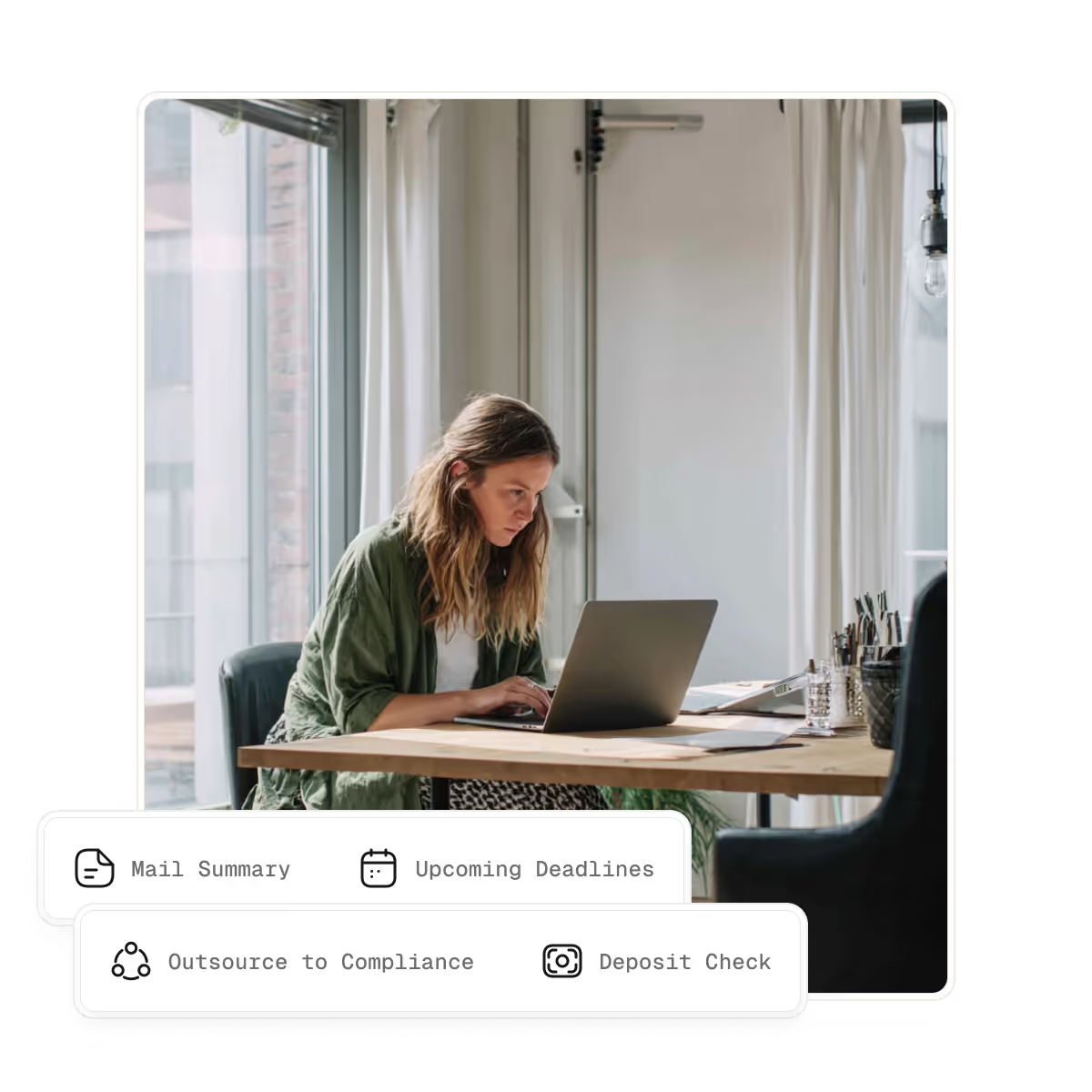

Secure document receipt
Recieve critical legal documents like lawsuits and tax notices without compromising your private address.

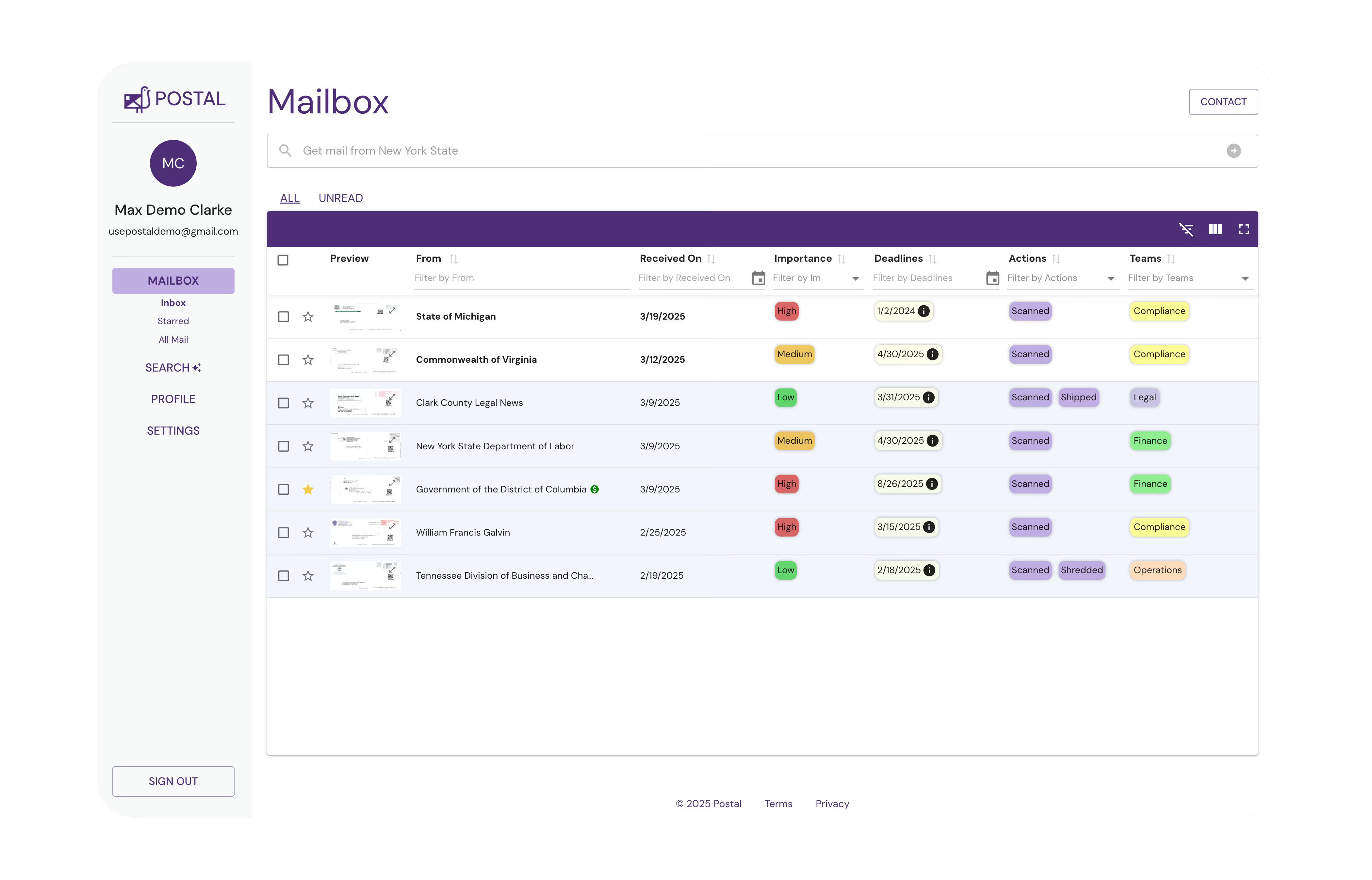
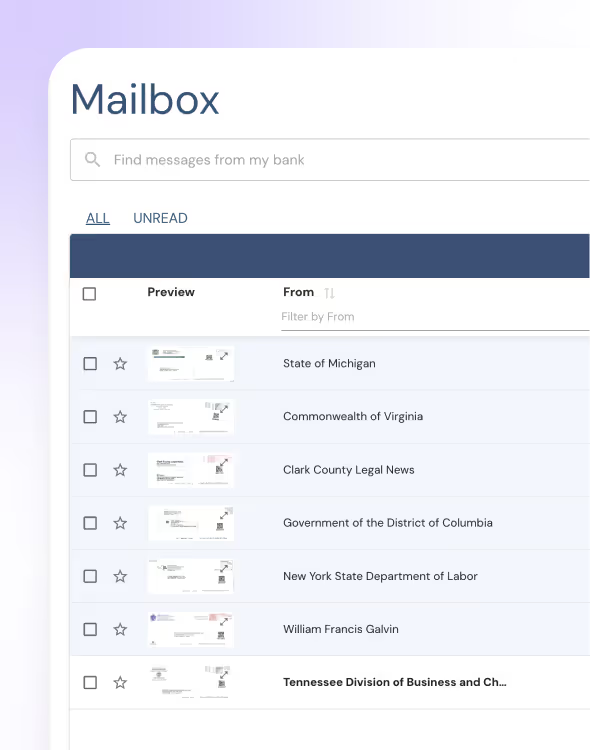
Access your mail online
See and manage your mail from anywhere. Get notifications for due dates and required actions for all your critical mail.

Automate compliance tasks
Stay focused and save time by handing off your compliance tasks to Postal's team of compliance experts.
145 Pine Haven Shores Road Suite 2296,
Shelburne, VT 05482

See deadlines at a glance
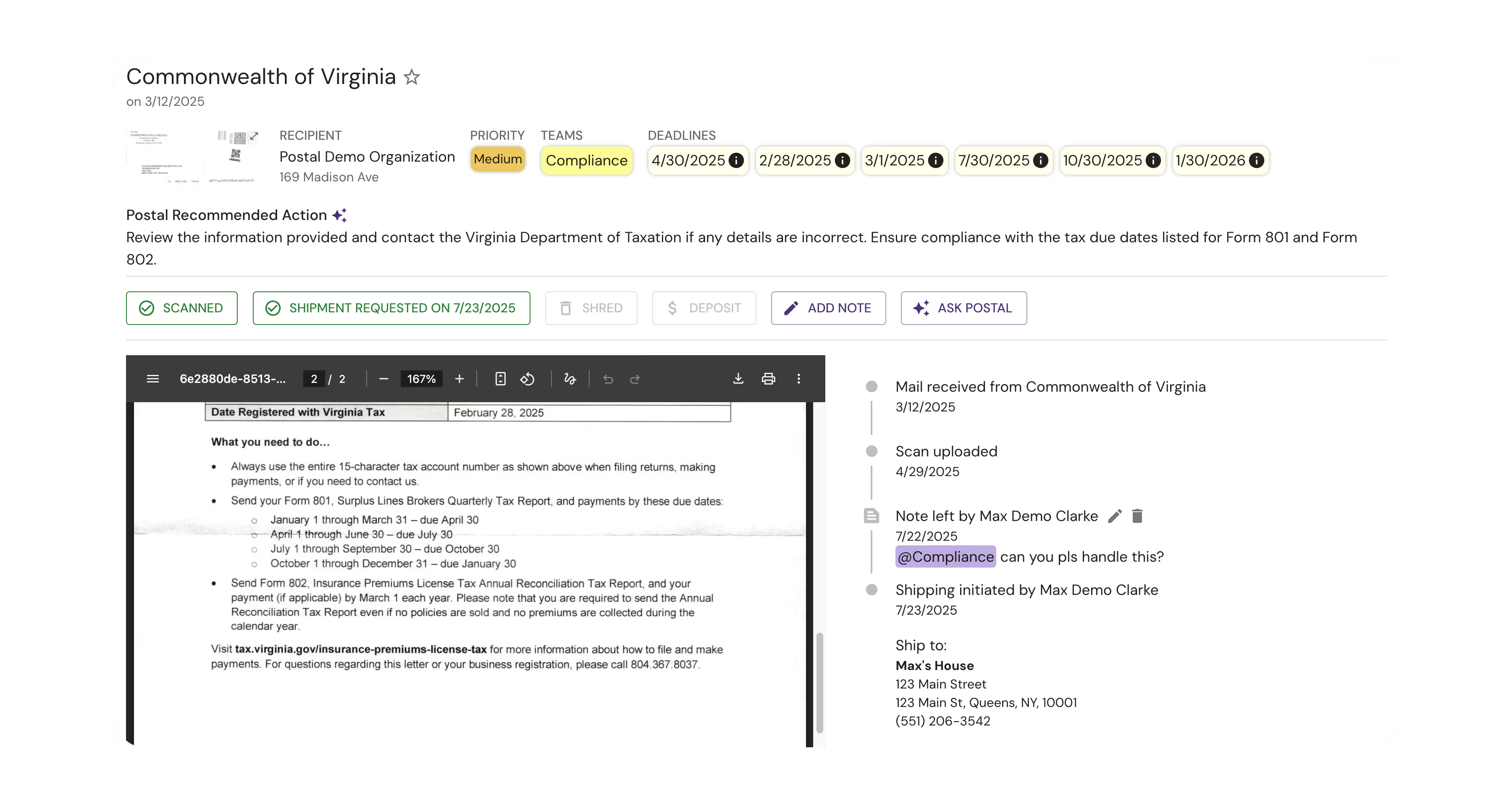
Postal’s advanced AI gives you an instant overview of all your compliance-related mail with next steps flagged for you.
- Due dates, penalties, and action extracted for you by AI.
- All your correspondence summarized and stored online.
- The right teammate notified every time mail is received.

Leave service of process to us
Hand off your compliance tasks to Postal with ease. Simply tag the Postal compliance team and they’ll make sure your compliance tasks and filings are handled accurately and on time.
- Stay compliant with changing laws and regulations
- Specialized in corporate licensing and insurance compliance
- Focus on your business and leave compliance to Postal

Secure and private mail handling
Protect your data with a secure virtual mailbox from Postal. Stringent security ensures that your data is encrypted, redacted when needed, and access controlled.
- Your data is protected at rest and in transit, so it’s never exposed as it moves through our systems.
- Postal runs redaction models on extracted text from documents, limiting the scope of data that large language models use to analyze your documents.
- Only the people who need it can reach your data, every action is logged, and everything is backed up to prevent data loss.

In Vermont, having a registered agent is a legal requirement for businesses operating as corporations or limited liability companies (LLCs). A registered agent serves as the official point of contact for receiving legal documents, tax forms, and important notices from the state or courts. This ensures that businesses do not miss crucial communications that could impact their legal standing or compliance status.
Having a registered agent also enhances a company's credibility. By designating a reliable contact person or agency, businesses can demonstrate professionalism and commitment to lawful operation. This is particularly useful for companies that may not have a physical presence in Vermont, as the registered agent can receive and handle all official correspondence, allowing the business to focus on its core activities.

When selecting a registered agent in Vermont, affordability should be a primary consideration. Look for agents that offer transparent pricing without hidden fees. Some companies provide package deals that include additional services, like compliance reminders or document storage, which can provide good value. Compare multiple agents to find the best fit for your budget.
Security is another critical factor. Ensure the registered agent has a reputation for maintaining the confidentiality of sensitive information. Check if they have secure facilities and digital measures in place to protect your documents. An established agent will typically have a strong track record, which adds a layer of trust.
Lastly, the ability to view your mail online is essential for modern businesses. Choose a registered agent that offers an online portal where you can access documents and correspondence at any time. This feature not only enhances convenience but also allows for timely responses to important notices, ensuring you remain compliant with state regulations.
Vermont is home to over 81,000 small businesses. Around 79.2 percent of them have no employees, under the national average, so more firms here bring on staff than average. They are major job providers as well, with small businesses making up 62.1 percent of Vermont's workforce, one of the higher shares in the country.
The state's economy leans heavily on tourism, particularly skiing and fall foliage travel, alongside a well-known specialty food and craft industry built around brands with strong local roots. Burlington serves as the state's largest commercial center, though much of Vermont's small business activity remains spread across smaller towns.
To get going you choose an LLC or corporation and file with the Vermont Secretary of State, then handle local permits and an Employer Identification Number from the IRS.
Vermont requires an Annual Report from both corporations and LLCs. Corporations file within two and a half months of their fiscal year end (typically March 15 for calendar-year filers), while LLCs file within three months of fiscal year end (typically March 31) every single year, not on a biennial cycle. Foreign corporations and LLCs follow the same respective schedules as domestic entities, though foreign filers pay considerably more.
Domestic corporations and domestic LLCs both pay $45 (the LLC rate rose from an older $35 figure). Foreign corporations pay $200, and foreign LLCs pay somewhere in the $140-$170 range depending on the source, worth confirming directly with the Vermont Secretary of State. A $25 late penalty applies, and the state can terminate the entity if the report goes unfiled for the grace period.

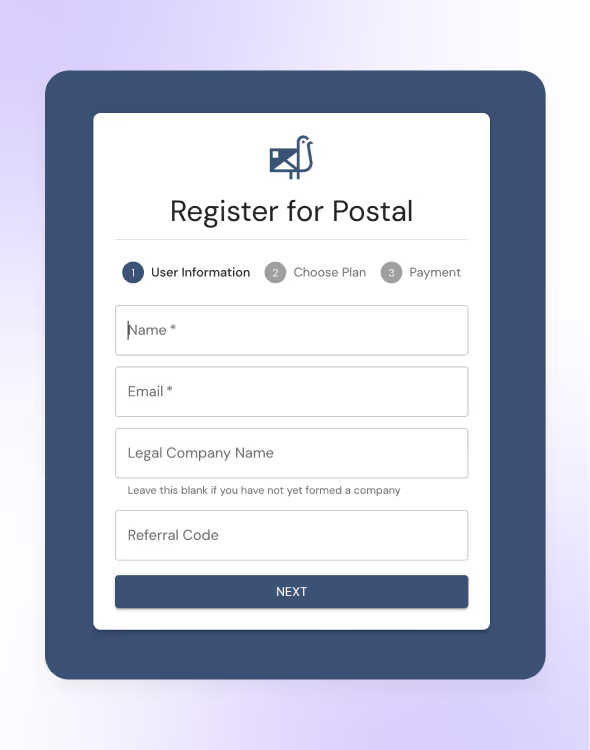
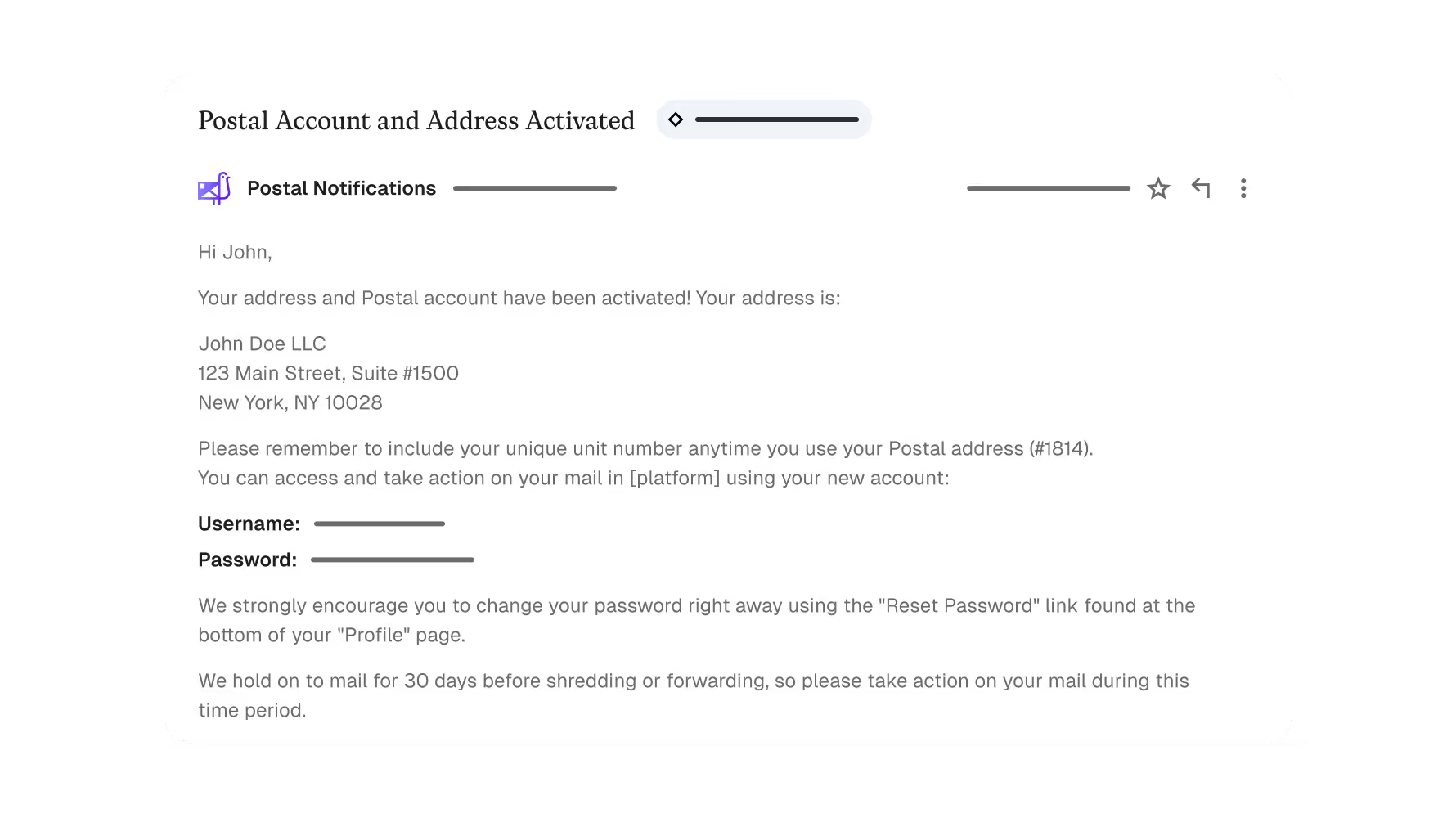
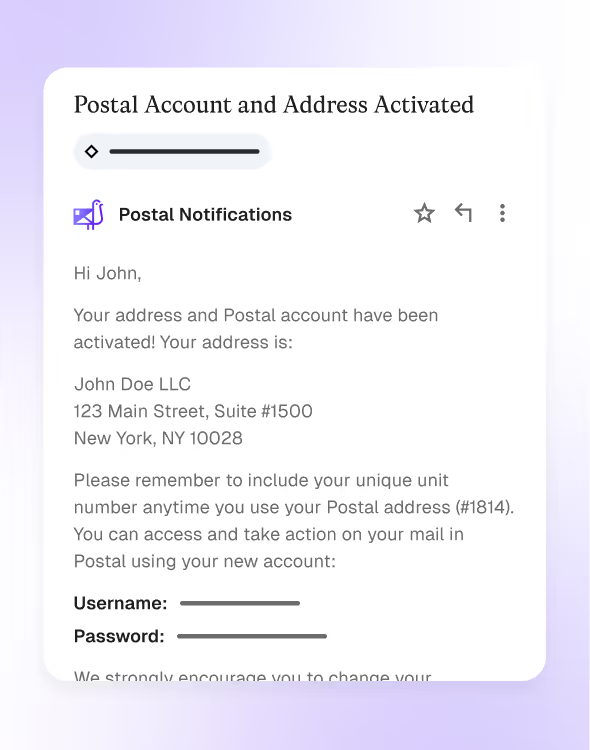
Manage your mail from anywhere
Receive scanned, summarized copies of your mail the day it’s received.
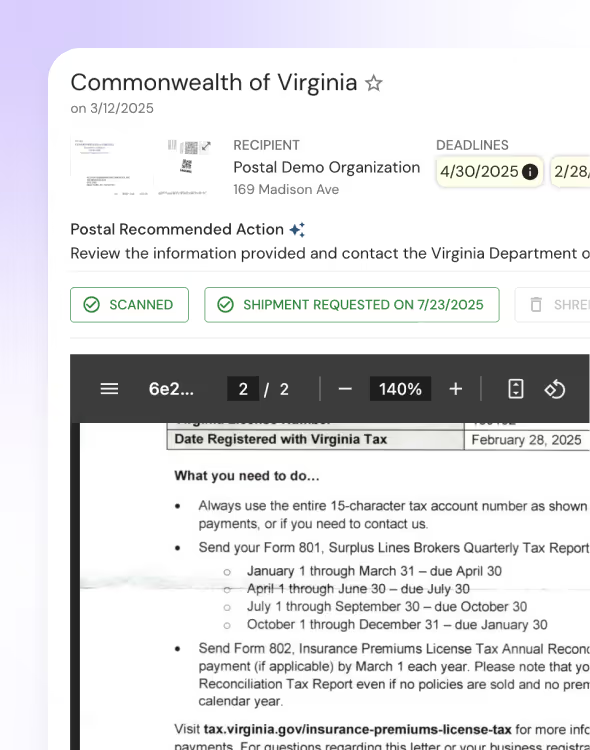
Put compliance on autopilot
If you need it, we’ll action your service of process mail for you.
When are Vermont's annual filings due?
How much do foreign entities pay compared to domestic ones?
How significant are small businesses to Vermont's workforce?
What defines Vermont's small business economy?
What happens if I don't file in Vermont?
How do I form a business in Vermont?
Available in all 50 states



- Security compliant
- Change of address guidance
- Friendly customer support