

Secure document receipt
Recieve critical legal documents like lawsuits and tax notices without compromising your private address.

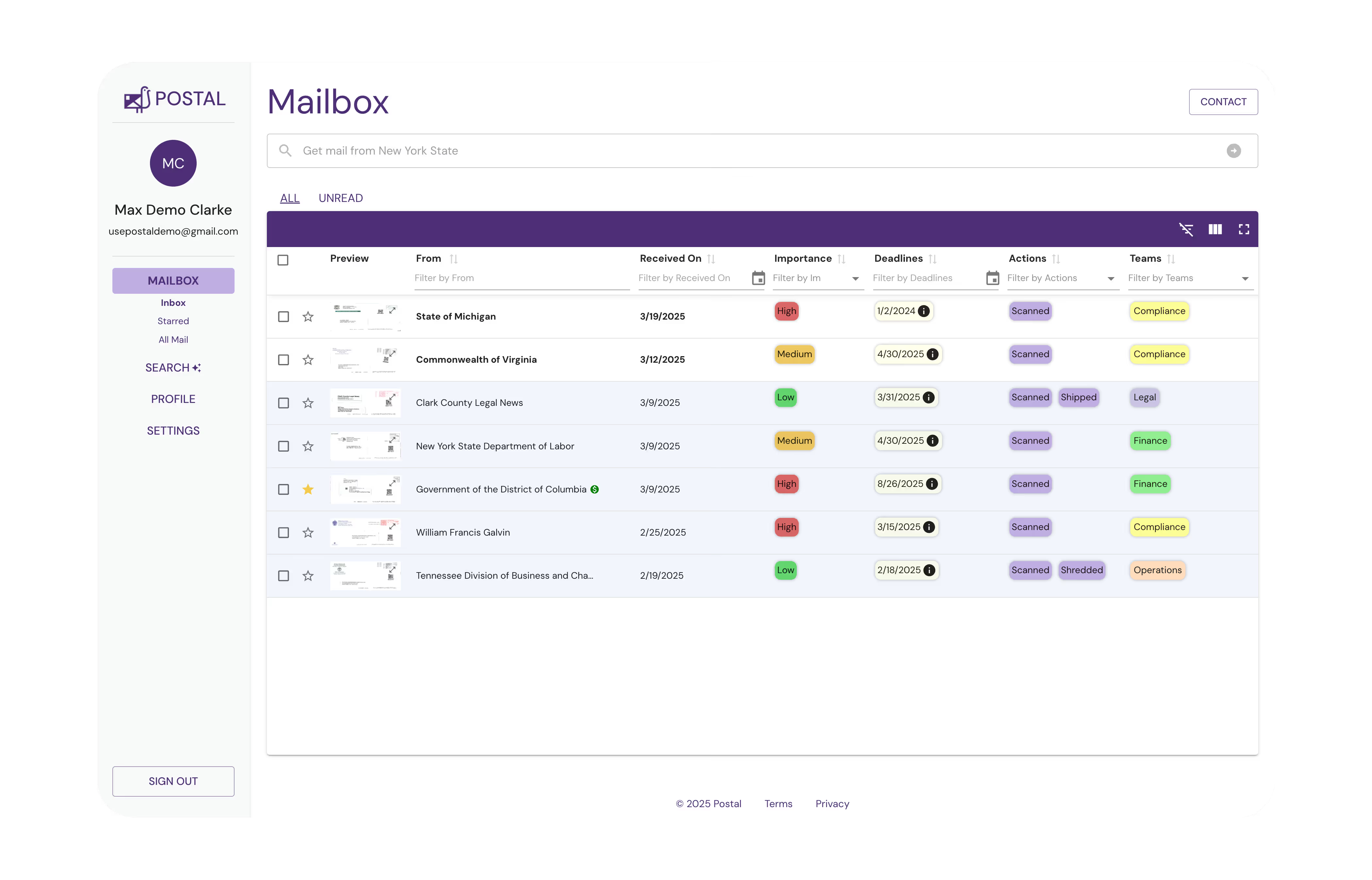
Access your mail online
See and manage your mail from anywhere. Get notifications for due dates and required actions for all your critical mail.

Automate compliance tasks
Stay focused and save time by handing off your compliance tasks to Postal's team of compliance experts.
150 Royall St Suite #205,
Canton, MA 02021

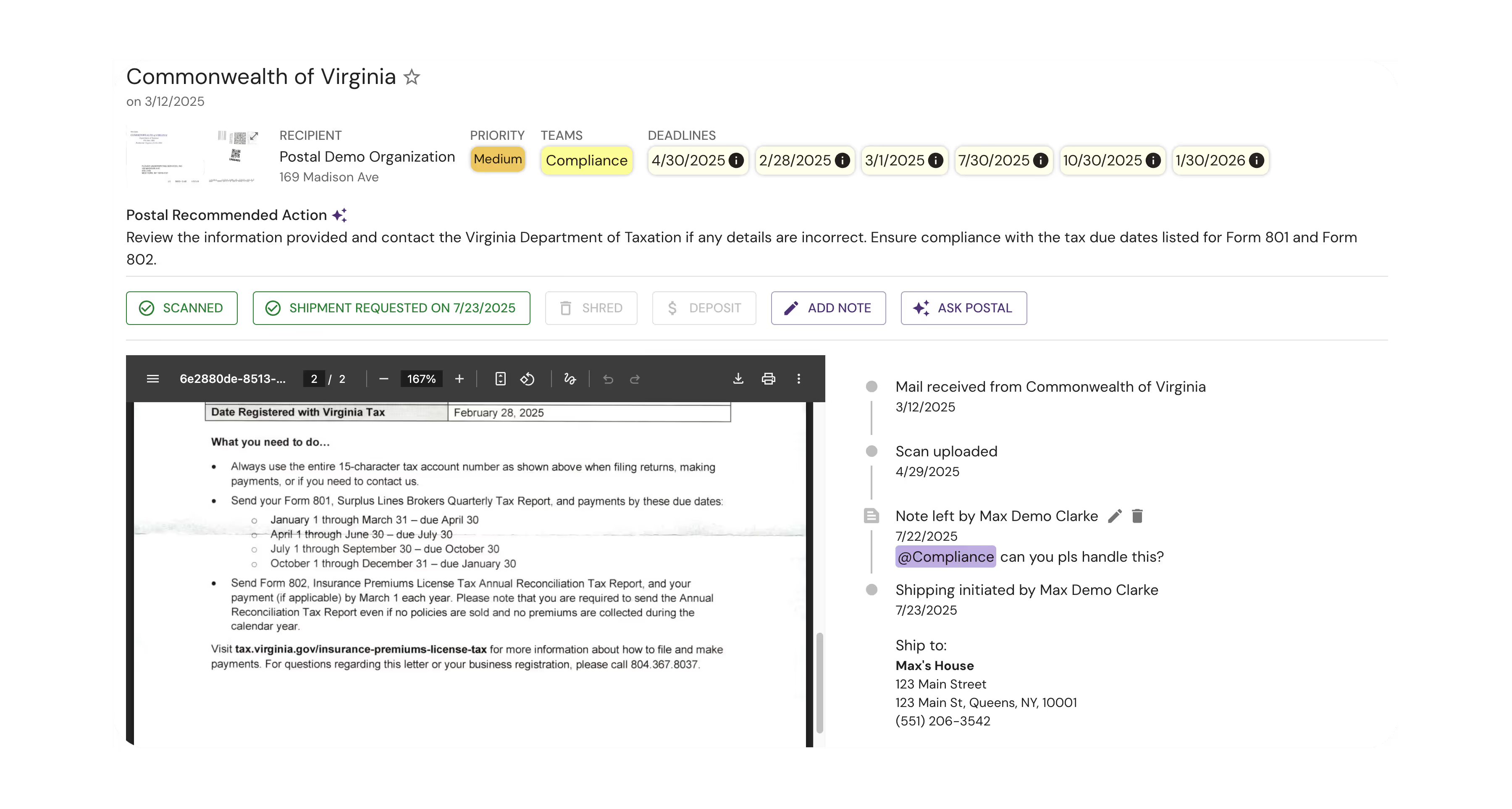
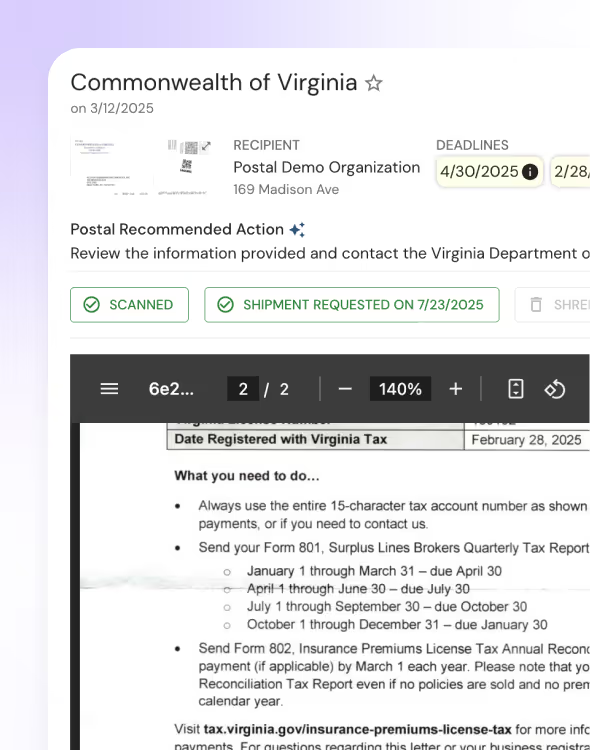
See deadlines at a glance
Postal’s advanced AI gives you an instant overview of all your compliance-related mail with next steps flagged for you.
- Due dates, penalties, and action extracted for you by AI.
- All your correspondence summarized and stored online.
- The right teammate notified every time mail is received.

Leave service of process to us
Hand off your compliance tasks to Postal with ease. Simply tag the Postal compliance team and they’ll make sure your compliance tasks and filings are handled accurately and on time.
- Stay compliant with changing laws and regulations
- Specialized in corporate licensing and insurance compliance
- Focus on your business and leave compliance to Postal

Secure and private mail handling
Protect your data with a secure virtual mailbox from Postal. Stringent security ensures that your data is encrypted, redacted when needed, and access controlled.
- Your data is protected at rest and in transit, so it’s never exposed as it moves through our systems.
- Postal runs redaction models on extracted text from documents, limiting the scope of data that large language models use to analyze your documents.
- Only the people who need it can reach your data, every action is logged, and everything is backed up to prevent data loss.

In Massachusetts, having a registered agent is not just a recommendation; it's a requirement for businesses like corporations and limited liability companies (LLCs). A registered agent acts as the official point of contact for receiving legal documents, government notices, and tax information on behalf of the business. This is crucial because it ensures that a company receives important correspondence in a timely manner, which can affect legal compliance and operational integrity.
Choosing a registered agent can provide privacy and convenience, as it keeps your business's address off public filings. This can be particularly beneficial for small business owners who may use their home addresses for business registration. Additionally, a registered agent can help ensure that your business remains in good standing by facilitating timely compliance with state requirements, such as Massachusetts annual report filing, allowing you to focus on running your enterprise rather than worrying about documentation.

Selecting a registered agent in Massachusetts involves assessing several key factors. First, affordability is crucial; compare pricing structures and any additional fees that may apply. Look for transparency in costs to avoid unexpected charges, ensuring that your budget aligns with the agent’s offerings. Some agents provide bundled services that can save you money, so consider those options as well.
Security is another imperative aspect. Your registered agent should prioritize confidentiality and protection of sensitive information. Investigate their track record regarding data breaches and ensure they use secure systems for handling and storing your documents. A reliable agent will have robust security measures in place to safeguard your business information.
The ability to access your mail online enhances convenience and efficiency. Choose an agent that offers a user-friendly online portal where you can view and manage your correspondence easily. This feature allows for timely responses to important documents and helps you stay organized. Prioritize agents with a proven record of providing seamless digital services, ensuring you can interact with your important papers from anywhere.
In Massachusetts there are over 756,000 small businesses, with about 81 percent running solo and no staff on the books, slightly under the national average, meaning a somewhat bigger share of firms here take on employees.
Boston has built one of the country's most recognized hubs for biotechnology and life sciences, helped along by the concentration of universities and research hospitals in and around the city. The state also ranks among the leaders nationally in venture capital funding per capita, particularly for firms in software and medical technology.
Starting a business means choosing an LLC or corporation and filing with the Massachusetts Secretary of the Commonwealth. From there you handle local permits and pull an Employer Identification Number from the IRS.
Massachusetts corporations file an Annual Report two and a half months after their fiscal year ends, meaning reports due by March 15 for calendar-year filers, while LLCs instead file on their specific formation anniversary date each year. Foreign corporations and LLCs follow the same respective schedules and fees as domestic entities.
Corporations pay $109 online or $125 by mail, while LLCs pay a notably higher $520 online or $500 by mail, among the steepest annual report fees in the country. A late corporate filing starts at a $25 penalty that escalates to $5 a day and eventually $200 a day, while LLCs face no flat late fee but risk losing good standing. Either entity type can be administratively dissolved after two consecutive years of missed filings.

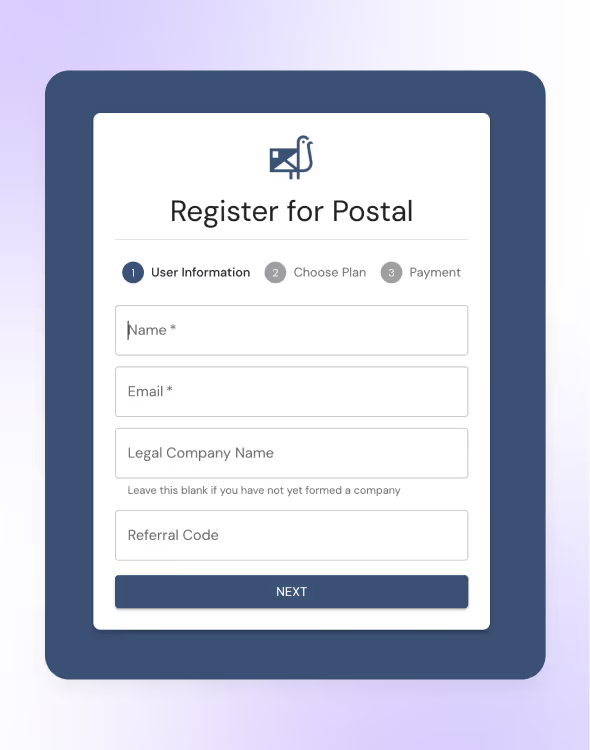
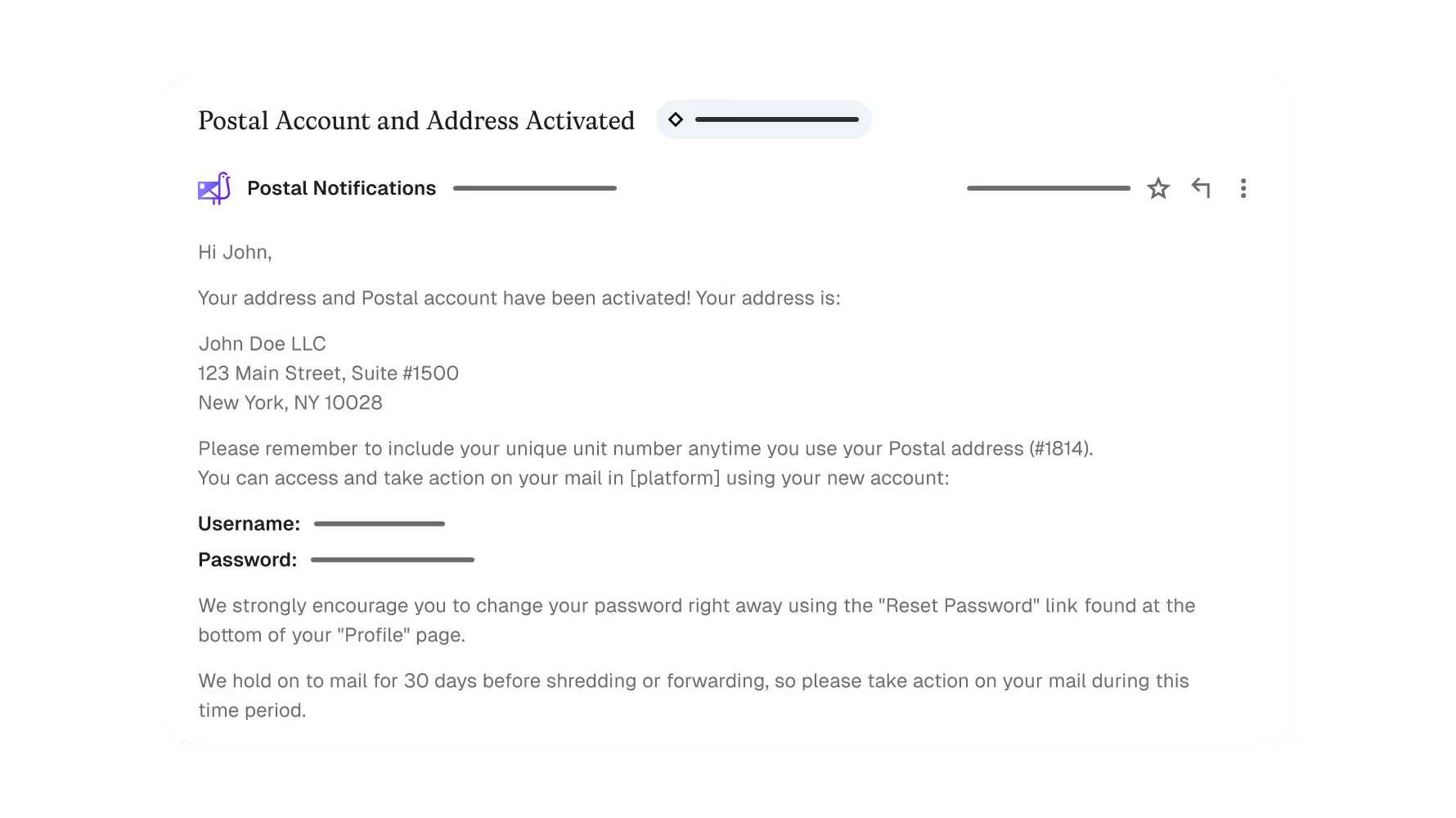
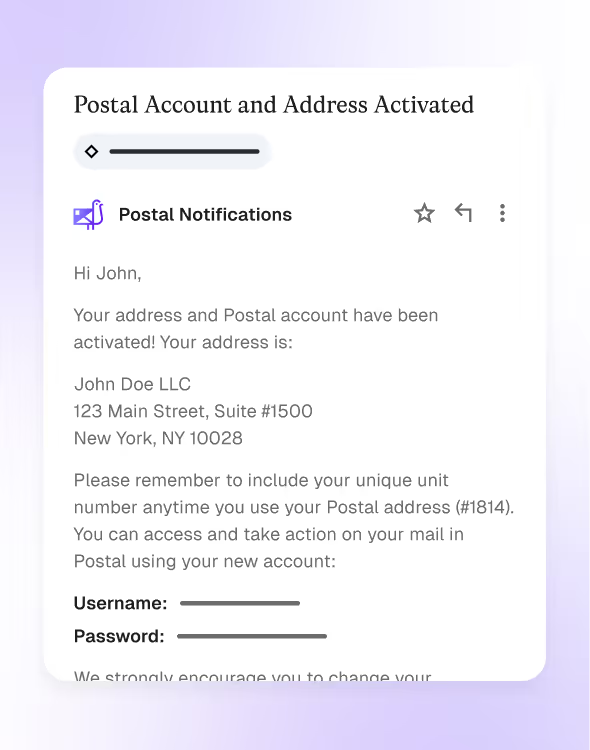
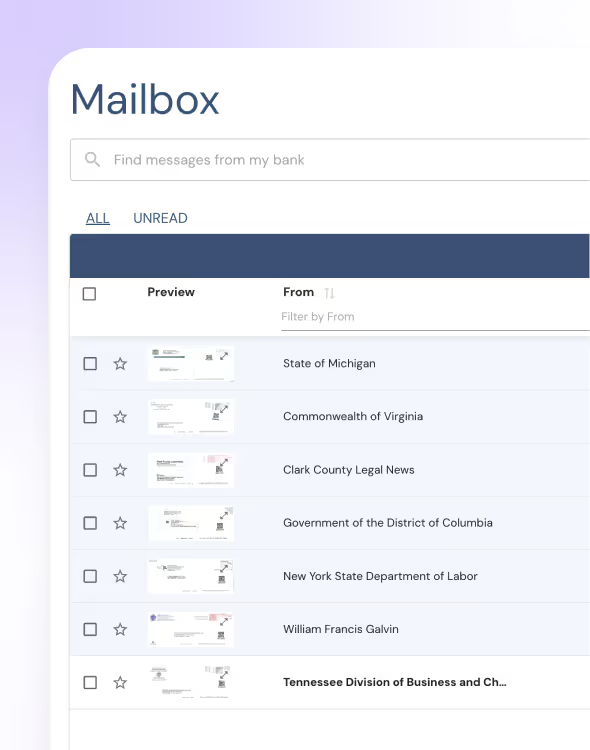
Manage your mail from anywhere
Receive scanned, summarized copies of your mail the day it’s received.
Put compliance on autopilot
If you need it, we’ll action your service of process mail for you.
Why are Massachusetts LLC filing fees so high?
When are filings due in Massachusetts?
How do late penalties work in Massachusetts?
What makes Boston a standout for small businesses?
What percentage of Massachusetts small businesses have employees?
Where do I file to form a business in Massachusetts?
Available in all 50 states



- Security compliant
- Change of address guidance
- Friendly customer support