

Secure document receipt
Recieve critical legal documents like lawsuits and tax notices without compromising your private address.

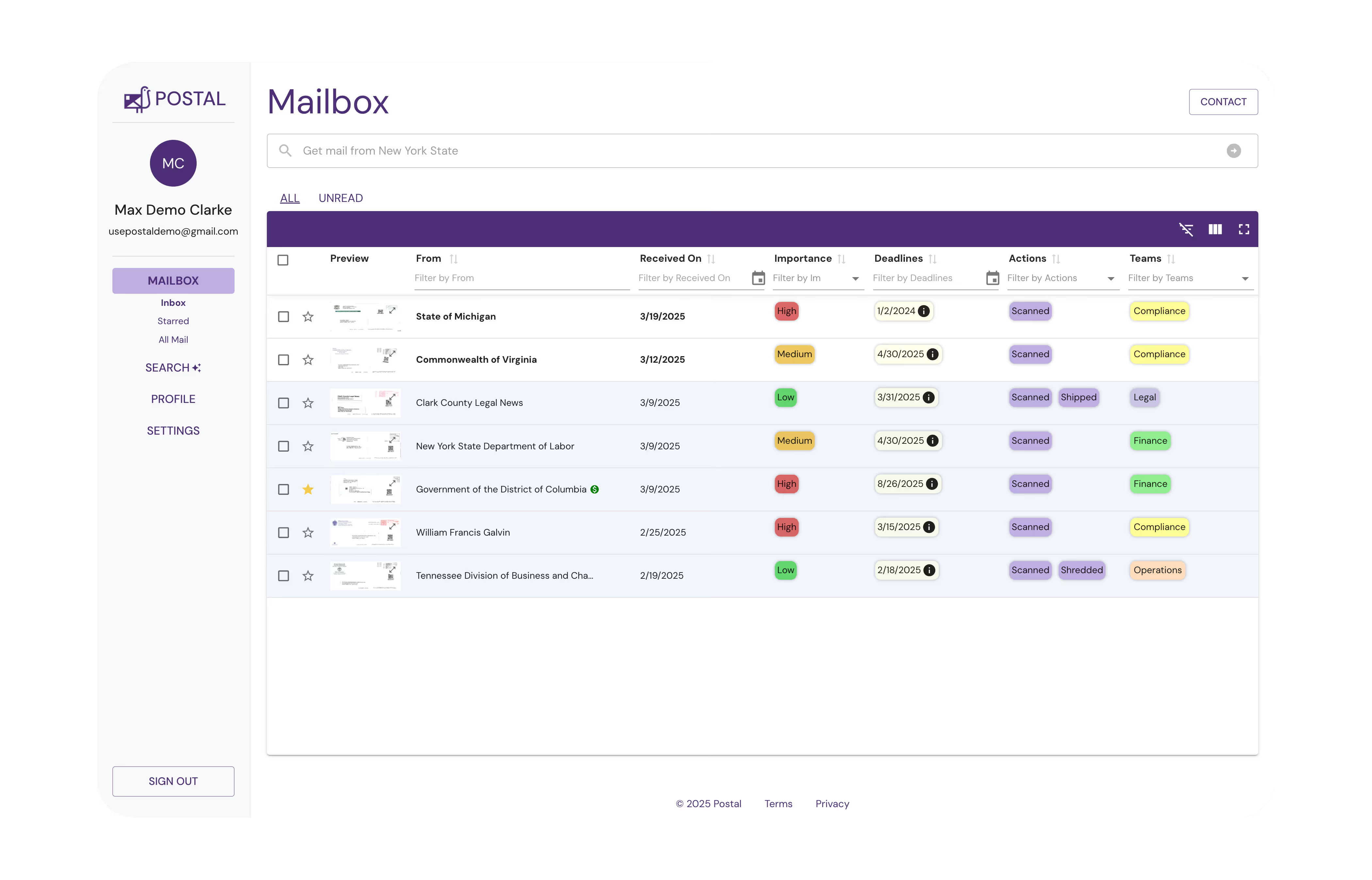
Access your mail online
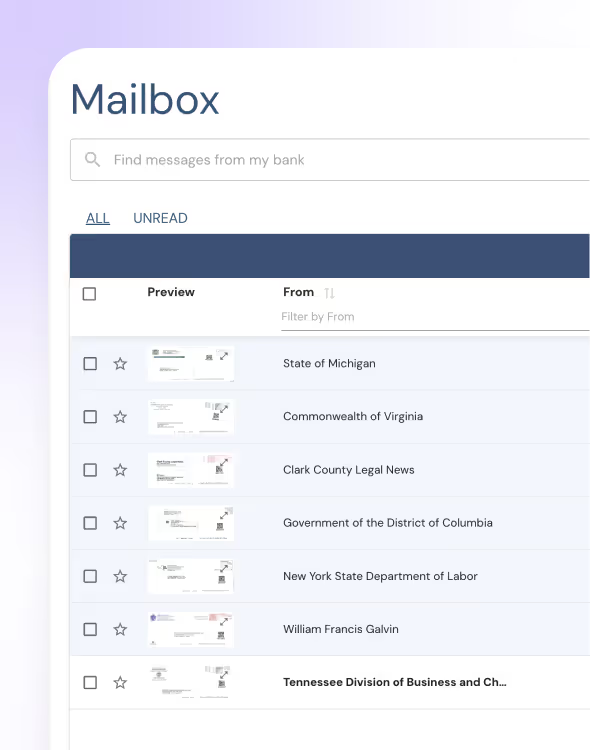
See and manage your mail from anywhere. Get notifications for due dates and required actions for all your critical mail.

Automate compliance tasks
Stay focused and save time by handing off your compliance tasks to Postal's team of compliance experts.
3085 Mountainwood Circle,
Juneau, AK 99801

See deadlines at a glance
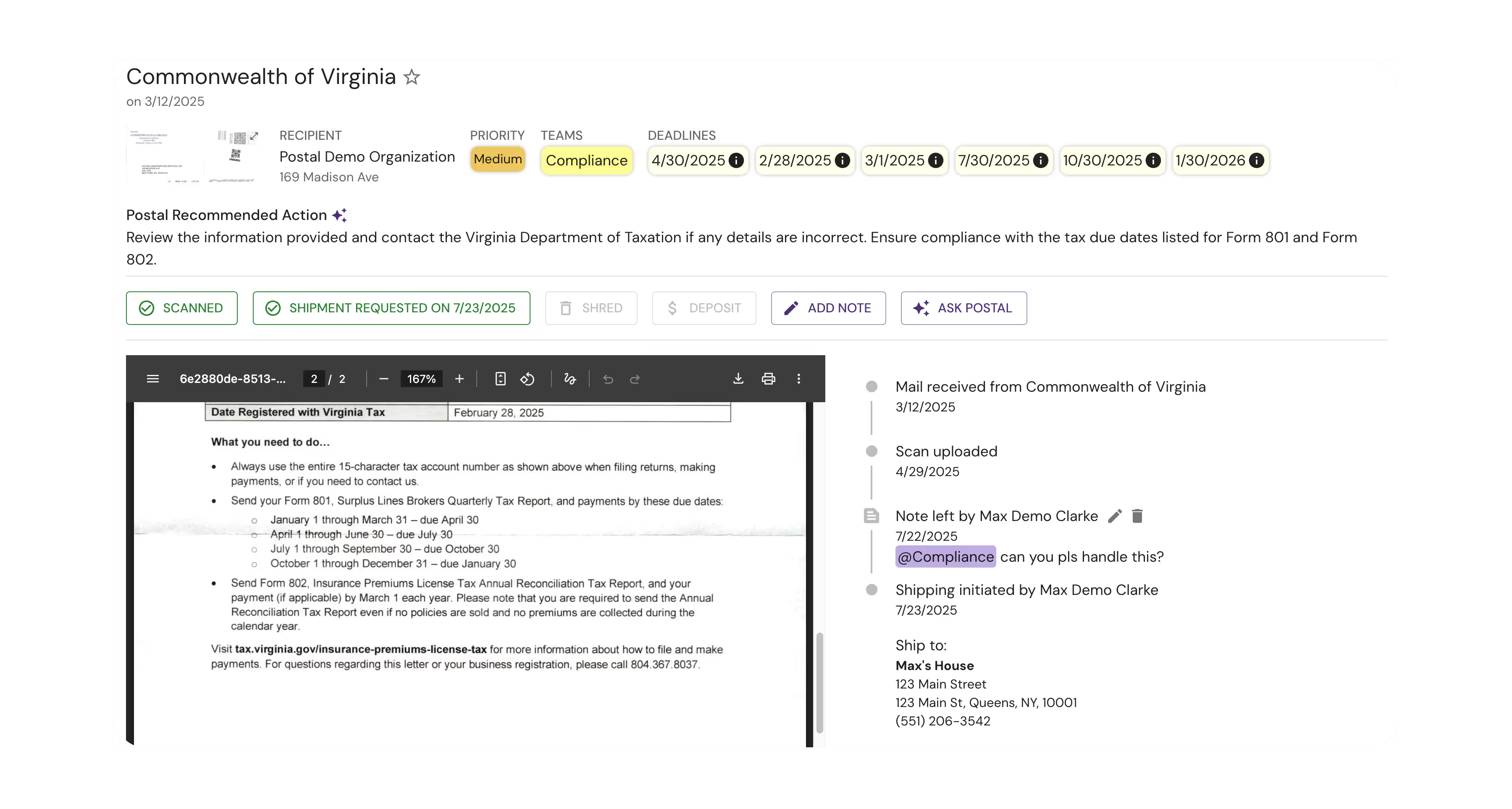
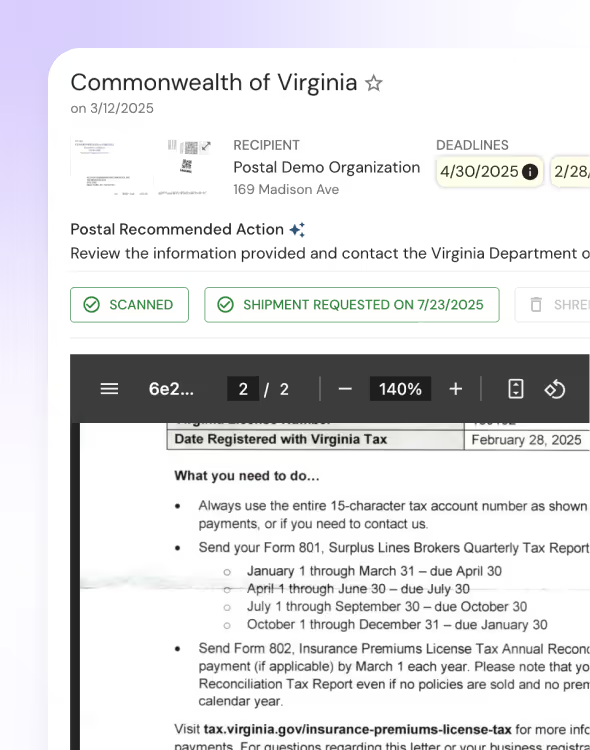
Postal’s advanced AI gives you an instant overview of all your compliance-related mail with next steps flagged for you.
- Due dates, penalties, and action extracted for you by AI.
- All your correspondence summarized and stored online.
- The right teammate notified every time mail is received.

Leave service of process to us
Hand off your compliance tasks to Postal with ease. Simply tag the Postal compliance team and they’ll make sure your compliance tasks and filings are handled accurately and on time.
- Stay compliant with changing laws and regulations
- Specialized in corporate licensing and insurance compliance
- Focus on your business and leave compliance to Postal

Secure and private mail handling
Protect your data with a secure virtual mailbox from Postal. Stringent security ensures that your data is encrypted, redacted when needed, and access controlled.
- Your data is protected at rest and in transit, so it’s never exposed as it moves through our systems.
- Postal runs redaction models on extracted text from documents, limiting the scope of data that large language models use to analyze your documents.
- Only the people who need it can reach your data, every action is logged, and everything is backed up to prevent data loss.

In Alaska, a registered agent is essential for any business entity, such as corporations or limited liability companies (LLCs). This designated individual or business receives important legal documents on behalf of the company, including service of process and official correspondence from the state. Having a registered agent ensures that the business remains compliant with state regulations and can respond promptly to any legal actions or notifications.
Choosing a registered agent with a physical address in Alaska is crucial, as it provides a reliable point of contact for legal matters. This requirement not only helps maintain transparency in business operations but also protects the company's owners from missing critical communications. Selecting a trustworthy registered agent contributes to a business's overall stability and credibility.

When choosing a registered agent in Alaska, affordability is a key factor. Look for services that offer transparent pricing with no hidden fees. It's essential to compare different agents and find one that fits your budget while still providing quality support. Keep an eye out for any package deals that include additional services such as compliance reminders or business formation assistance, which can save you money in the long run.
Security is paramount when selecting a registered agent. Ensure that the agent offers reliable security measures to protect your sensitive information. Data encryption, secure storage, and confidentiality policies are crucial to safeguarding your business documents and communications. Verifying the agent’s reputation through reviews and recommendations can also provide insight into their reliability.
An online mail viewing feature can greatly enhance your experience with a registered agent. This allows you to access important documents and correspondence anytime, anywhere. Look for services that provide a user-friendly online portal where you can securely view and manage your mail. This feature not only streamlines your operations but also ensures you never miss critical communications related to your business.
Alaska is home to over 77,000 small businesses, according to recent state-level data. About 77.7 percent of them operate with no employees, roughly 5 points below the national average, meaning a slightly larger share of Alaska's small businesses actually carry staff.
These firms employ 54.2 percent of the state's workforce, well above what small businesses account for nationally, and in the Anchorage area they pay an average of $60,650 per employee. The state has no individual income tax and no statewide sales tax, qualities that have helped it earn a reputation as one of the more tax friendly places in the country to run a small operation.
Anchorage remains the natural hub for new ventures, with Juneau and Fairbanks offering smaller markets and somewhat less competition. Registering a business in Alaska means selecting a structure, usually an LLC or corporation, and filing with the Division of Corporations, Business and Professional Licensing. Most businesses also need a statewide business license on top of any local permits, plus an Employer Identification Number from the IRS.
Alaska does not require annual reports. Instead, LLCs and corporations file a Biennial Report every two years, due January 2, with reports due in odd years for entities formed in odd years and even years for those formed in even years. The reporting window actually opens three months ahead of the deadline, so filers can submit as early as October 2 of the prior year. Domestic filers pay $100, while foreign, meaning out-of-state, entities pay $200, and the fee is the same whether the entity is structured as an LLC or a corporation. Nonprofit, religious, and cooperative corporations follow a separate schedule entirely, with reports due by July 2 and a much smaller filing fee of around $25.
There is a one-month grace period before late fees apply: $37.50 for domestic entities and $47.50 for foreign ones, and nonprofits face a smaller $5 penalty. Domestic corporations may also face an extra penalty of 10 percent of any business tax assessed for the period. Entities that remain noncompliant face escalating consequences: the state issues a notice and allows 60 days to respond, and if the report still isn't filed within six months of the original due date, the business risks administrative dissolution or, for foreign entities, revocation of its certificate of authority. Reinstatement is possible within two years of dissolution, after which a new entity must be formed entirely. The filing schedule varies considerably from one jurisdiction to the next, and Alaska's two-year cycle is less common than the annual filings most other states require.

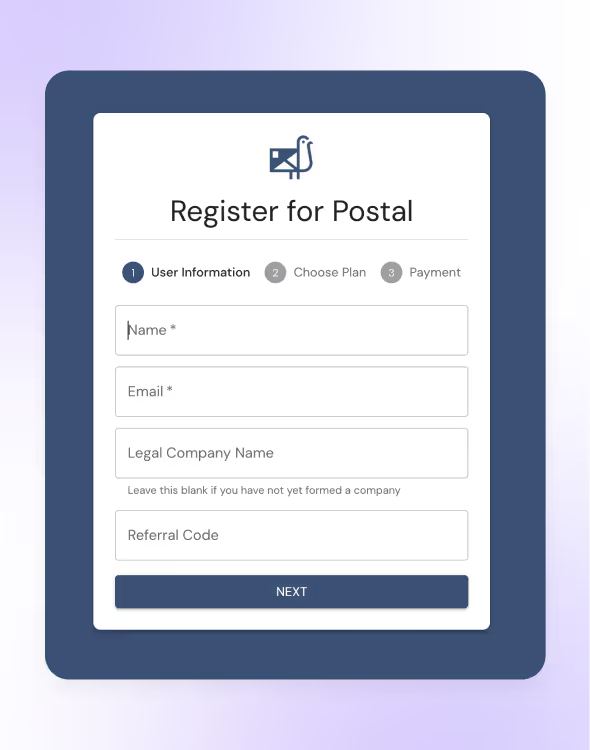
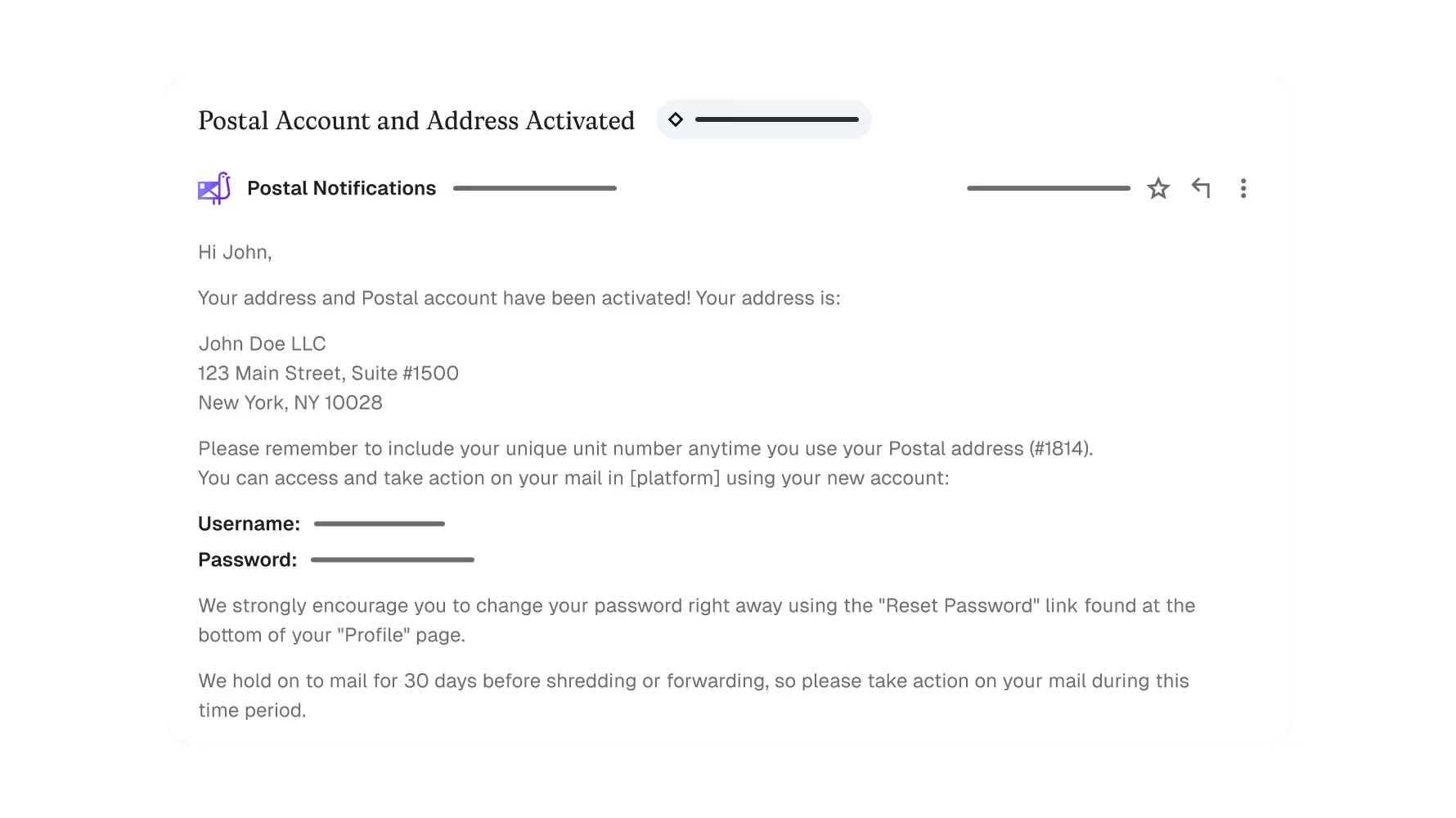
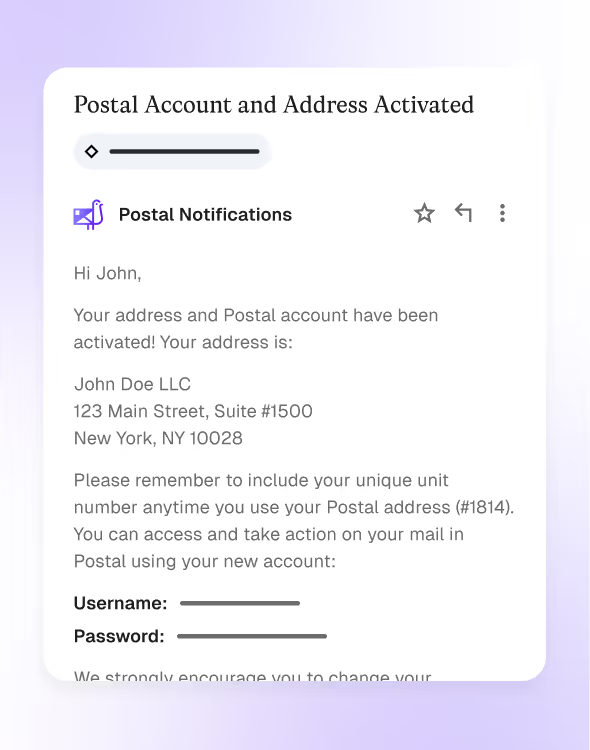
Manage your mail from anywhere
Receive scanned, summarized copies of your mail the day it’s received.
Put compliance on autopilot
If you need it, we’ll action your service of process mail for you.
Does Alaska require an annual report for LLCs and corporations?
How much does Alaska's Biennial Report cost?
What happens if I miss the Biennial Report deadline in Alaska?
Can I reinstate a business after it's been administratively dissolved in Alaska?
Do I need a registered agent to do business in Alaska?
Is Alaska tax-friendly for small business owners?
Available in all 50 states



- Security compliant
- Change of address guidance
- Friendly customer support