
Secure document receipt
Recieve critical legal documents like lawsuits and tax notices without compromising your private address.

Access your mail online
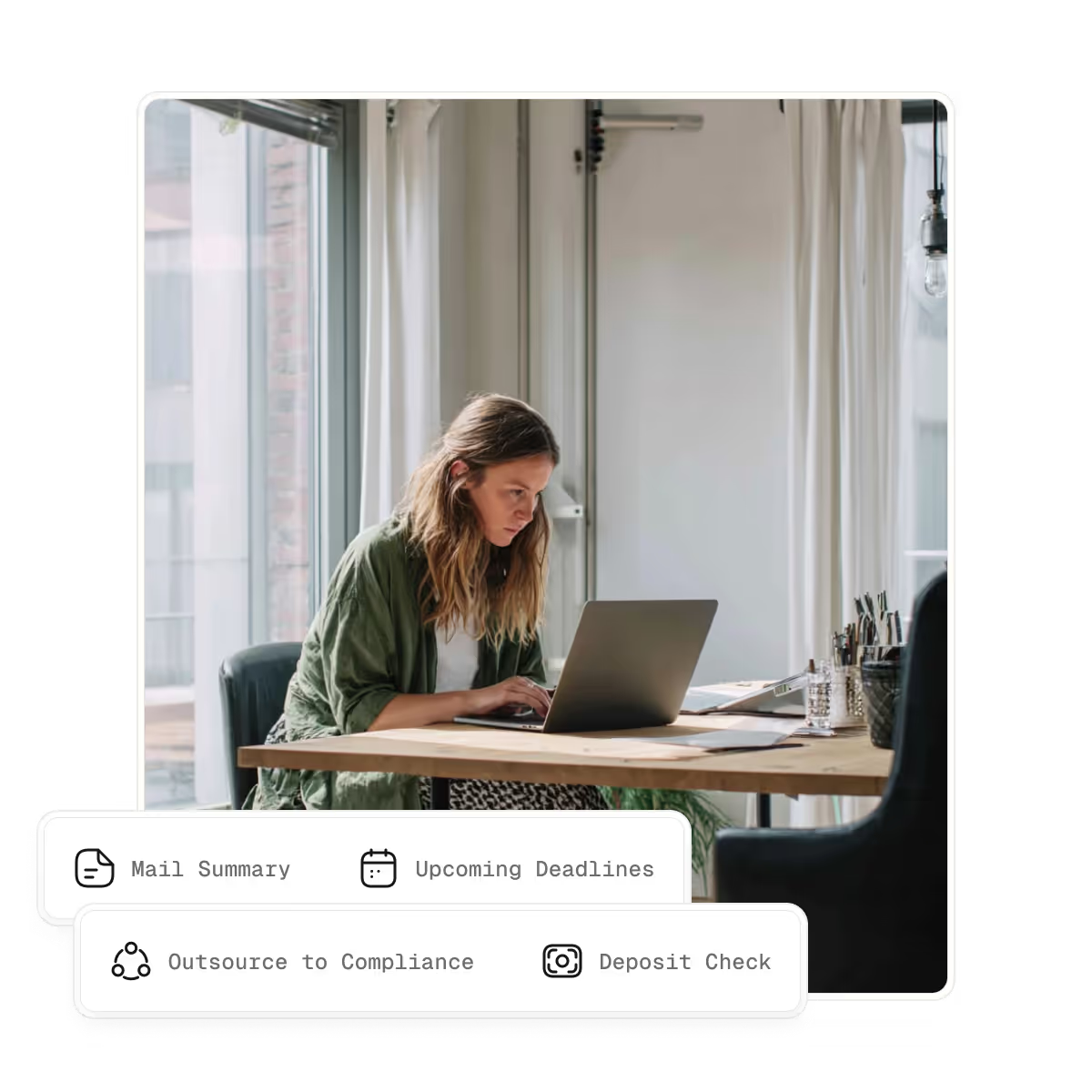
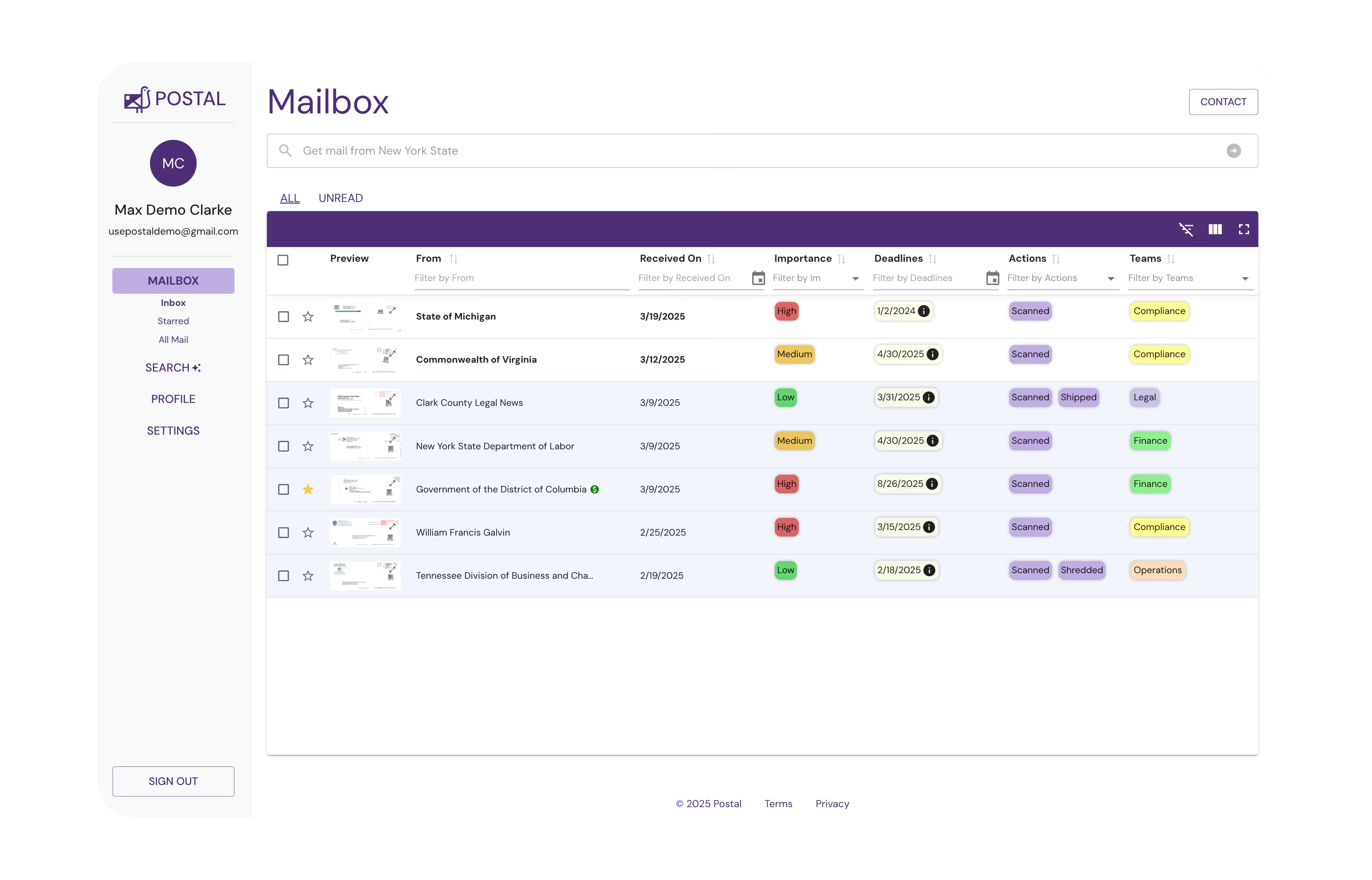
See and manage your mail from anywhere. Get notifications for due dates and required actions for all your critical mail.

Automate compliance tasks
Stay focused and save time by handing off your compliance tasks to Postal's team of compliance experts.
6 Landmark Square 4th Floor,
Stamford, CT 06901

See deadlines at a glance
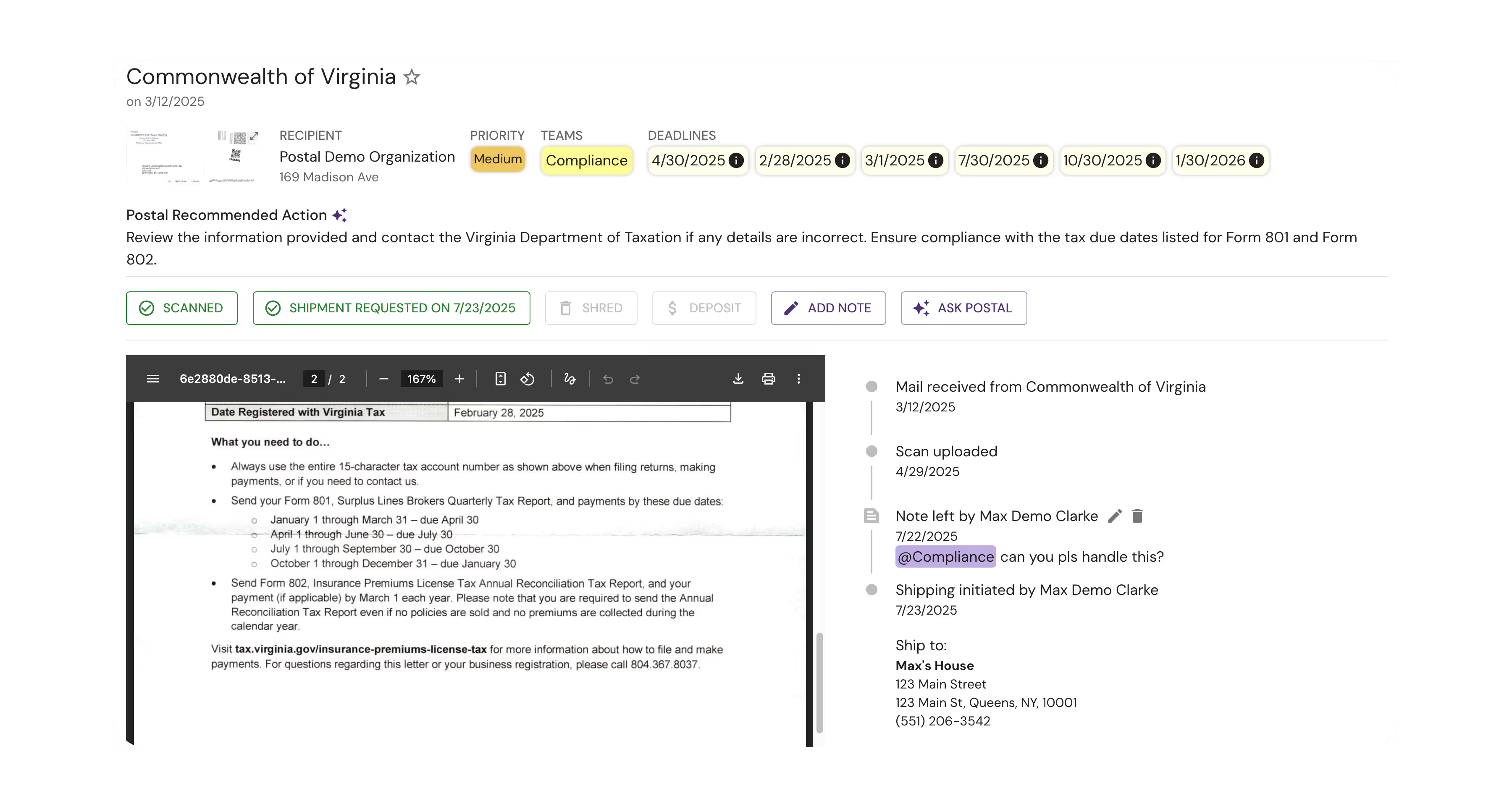
Postal’s advanced AI gives you an instant overview of all your compliance-related mail with next steps flagged for you.
- Due dates, penalties, and action extracted for you by AI.
- All your correspondence summarized and stored online.
- The right teammate notified every time mail is received.

Leave service of process to us
Hand off your compliance tasks to Postal with ease. Simply tag the Postal compliance team and they’ll make sure your compliance tasks and filings are handled accurately and on time.
- Stay compliant with changing laws and regulations
- Specialized in corporate licensing and insurance compliance
- Focus on your business and leave compliance to Postal

Secure and private mail handling
Protect your data with a secure virtual mailbox from Postal. Stringent security ensures that your data is encrypted, redacted when needed, and access controlled.
- Your data is protected at rest and in transit, so it’s never exposed as it moves through our systems.
- Postal runs redaction models on extracted text from documents, limiting the scope of data that large language models use to analyze your documents.
- Only the people who need it can reach your data, every action is logged, and everything is backed up to prevent data loss.

A registered agent is essential for businesses operating in Connecticut, as it serves as the official point of contact between the state and the company. This designated individual or entity receives important legal documents, government notifications, and service of process on behalf of the business. Having a registered agent ensures that you can respond promptly to legal matters, maintaining compliance with state requirements and avoiding potential setbacks.
Choosing a registered agent also allows for greater privacy and flexibility. Business owners can keep their personal addresses off public records, protecting their privacy. Furthermore, a registered agent can facilitate business operations by maintaining regular office hours, ensuring that crucial documents are received and attended to even if the business owner is unavailable. This professional support contributes to overall organizational efficiency.

When choosing a registered agent in Connecticut, affordability is a key factor. Compare fees among different agents, as costs can vary significantly. Look for transparent pricing structures with no hidden fees, ensuring that you understand exactly what you're paying for.
Security is essential when selecting a registered agent. Choose a provider that offers robust privacy measures to shield your personal information from public records. Verify that they maintain secure facilities and have reliable systems in place to handle confidential documents.
The ability to see your mail online is another important aspect. Select a registered agent that offers an online portal where you can conveniently access and manage important correspondence. This feature not only enhances your efficiency but also allows for better organization of your business documents.
Connecticut is home to over 381,000 small businesses, with roughly 82 percent operating without employees, putting it within half a point of the national average.
The state has a long-standing reputation in finance and insurance, with Hartford historically known as the insurance capital of the country, while Stamford and the wider Fairfield County area sit within commuting distance of New York City and host a number of corporate offices and financial services firms. That proximity has made the southwestern part of the state a popular base for smaller consulting and professional services businesses as well.
To form a business in Connecticut, you select an LLC or corporation and file with the Connecticut Secretary of State. From there, you handle any local licensing requirements and apply for an Employer Identification Number with the IRS.
Connecticut corporations file an Annual Report, with reports due by the last business day of the corporation's anniversary month, while LLCs follow a fixed March 31 deadline instead, with a filing window that opens January 1. Foreign stock corporations file on the same anniversary schedule as domestic ones, and foreign LLCs share the same March 31 date as domestic LLCs.
Domestic corporations pay $150, though foreign stock corporations pay considerably more at $435. LLCs, foreign or domestic, pay a flat $80. Connecticut doesn't charge a late fee for a missed deadline, but a report left unfiled for about a year puts the business at risk of administrative dissolution.

Manage your mail from anywhere
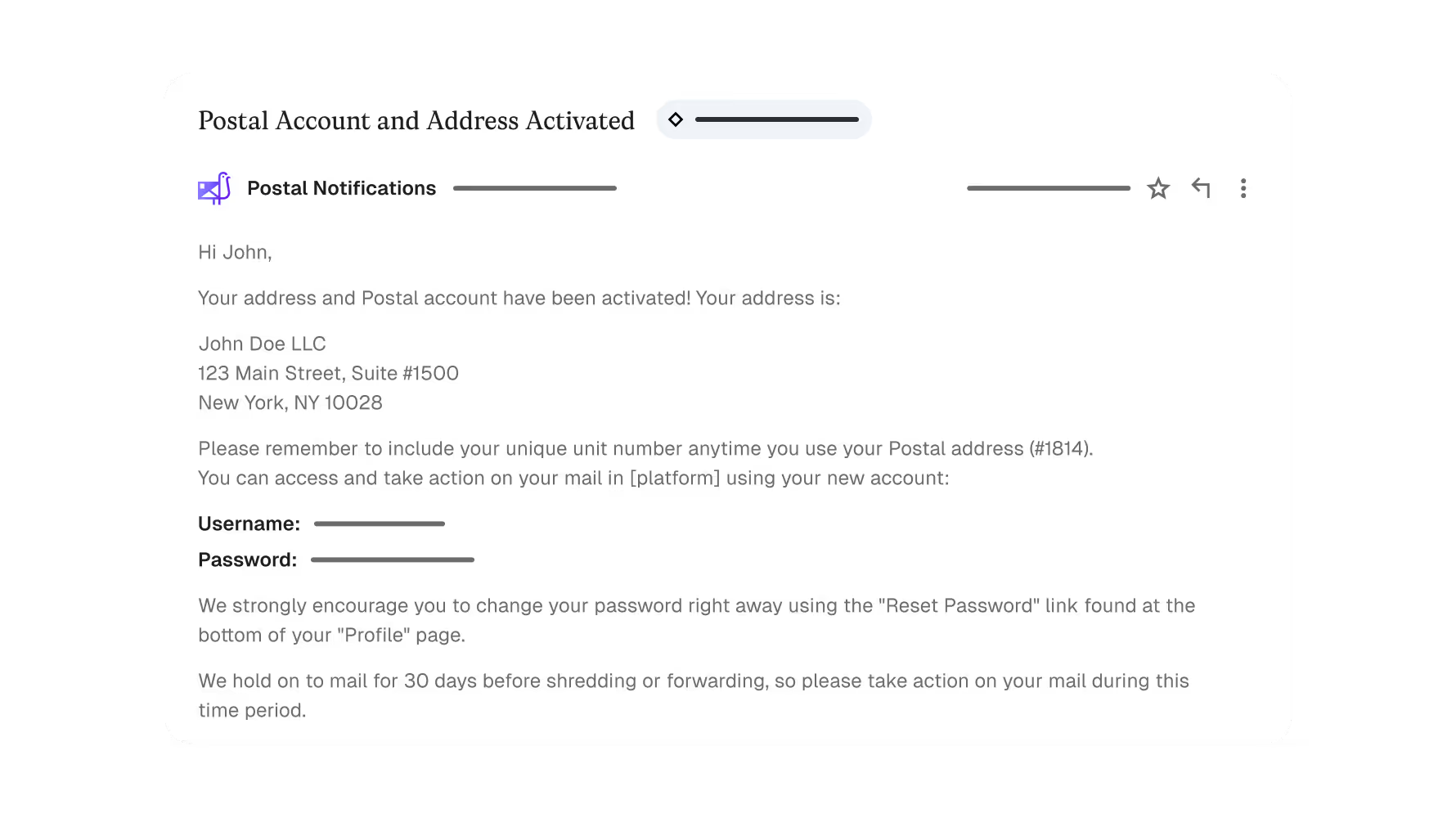
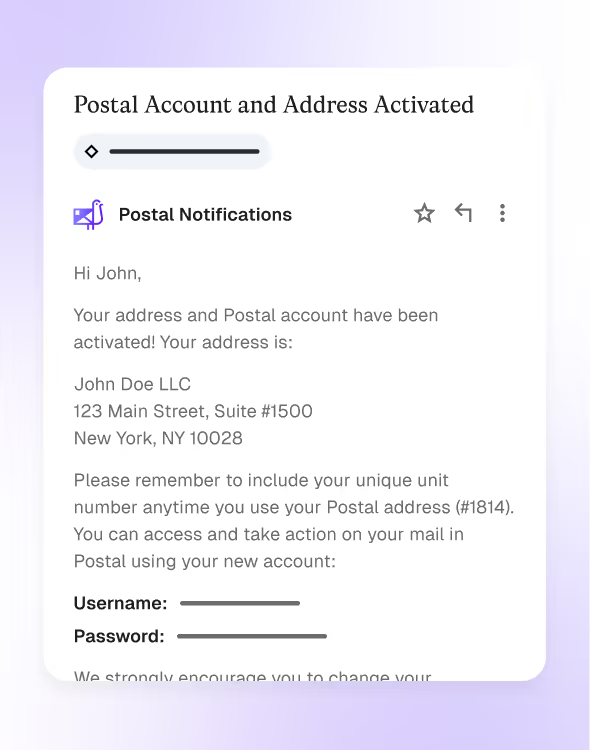
Receive scanned, summarized copies of your mail the day it’s received.
Put compliance on autopilot
If you need it, we’ll action your service of process mail for you.
Do corporations and LLCs have the same filing deadline in Connecticut?
Why is the filing fee so much higher for foreign corporations in Connecticut?
Are there late fees for missing the deadline in Connecticut?
What industries define Connecticut's business landscape?
How many small businesses operate in Connecticut?
How do I set up an LLC or corporation in Connecticut?
Available in all 50 states



- Security compliant
- Change of address guidance
- Friendly customer support