

Secure document receipt
Recieve critical legal documents like lawsuits and tax notices without compromising your private address.

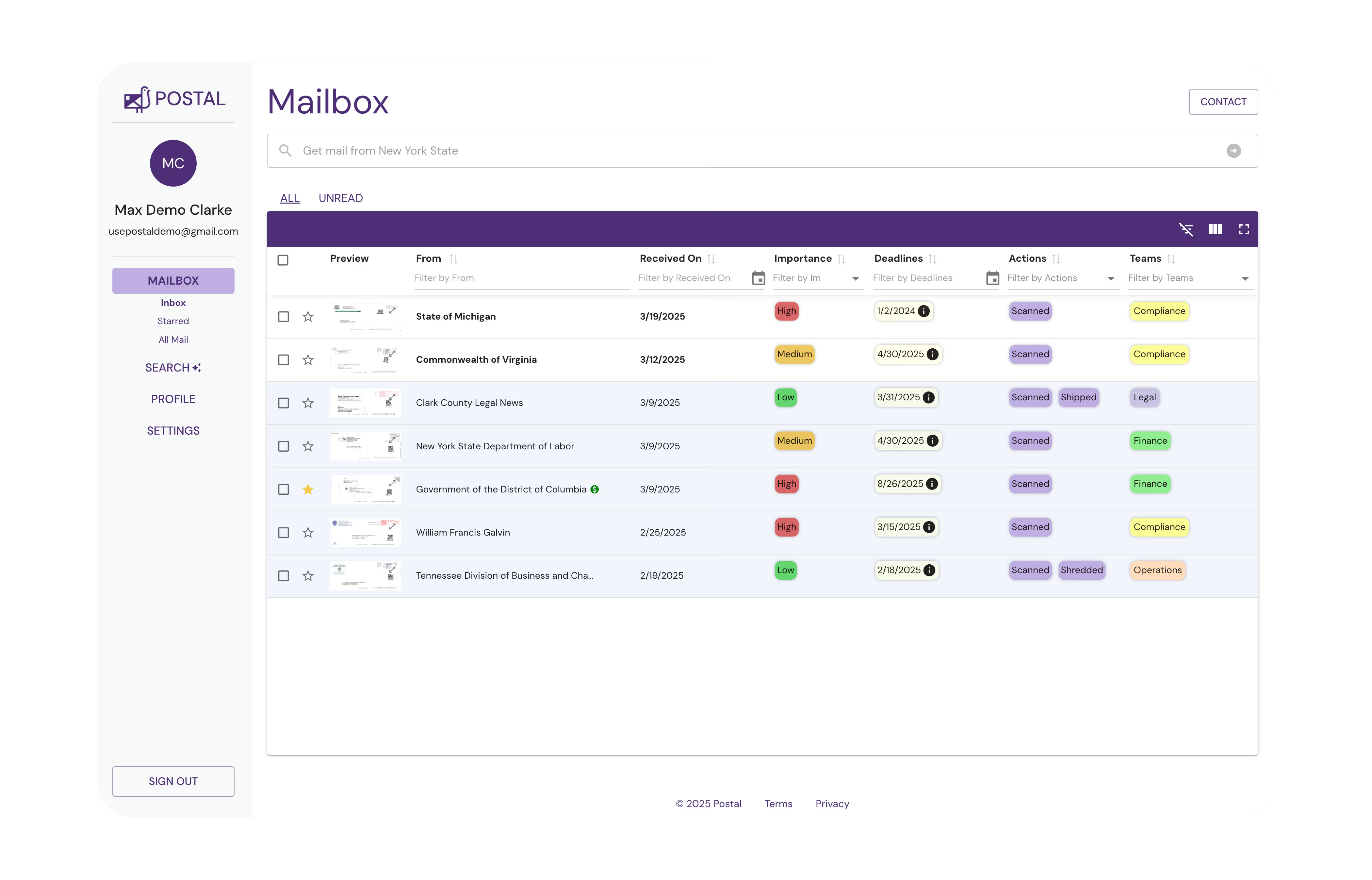
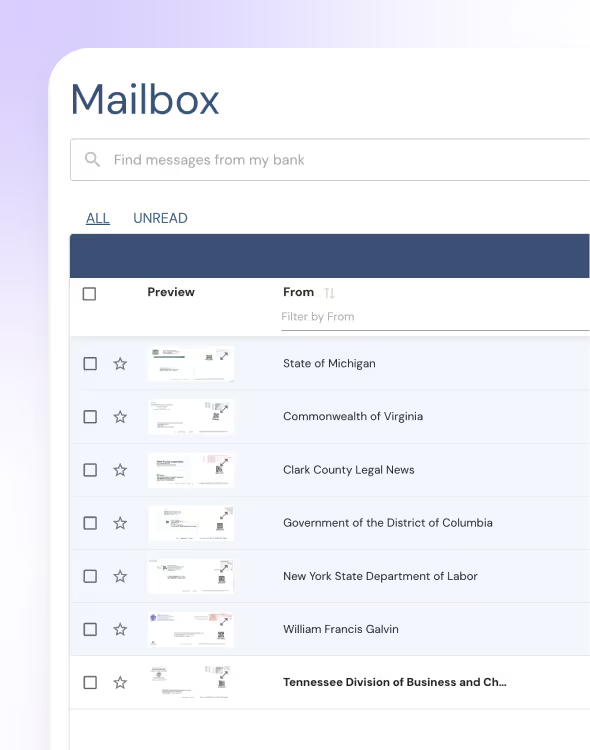
Access your mail online
See and manage your mail from anywhere. Get notifications for due dates and required actions for all your critical mail.

Automate compliance tasks
Stay focused and save time by handing off your compliance tasks to Postal's team of compliance experts.
2985 Gordy Parkway 1st Floor,
Marietta, GA 30066

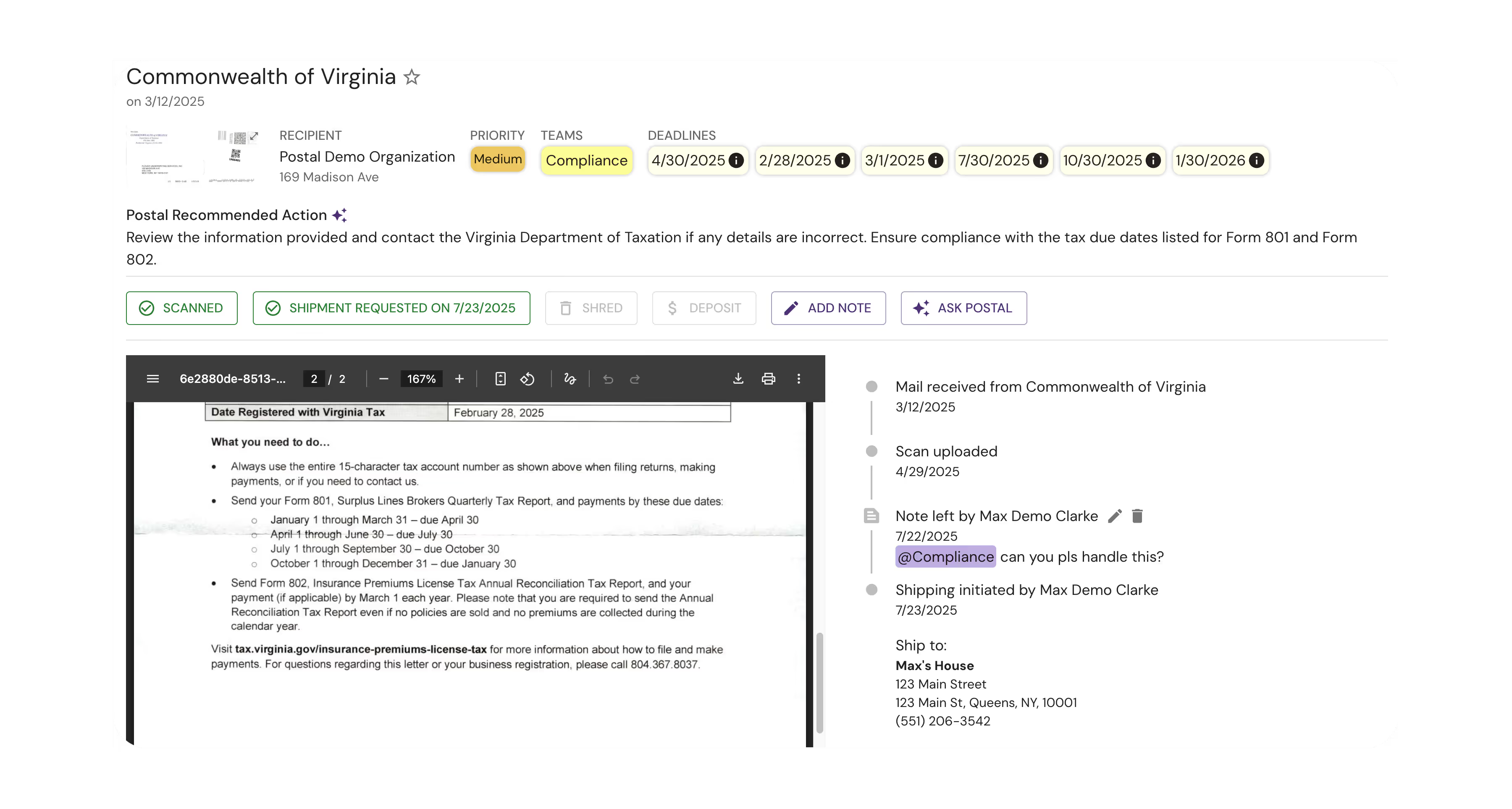
See deadlines at a glance
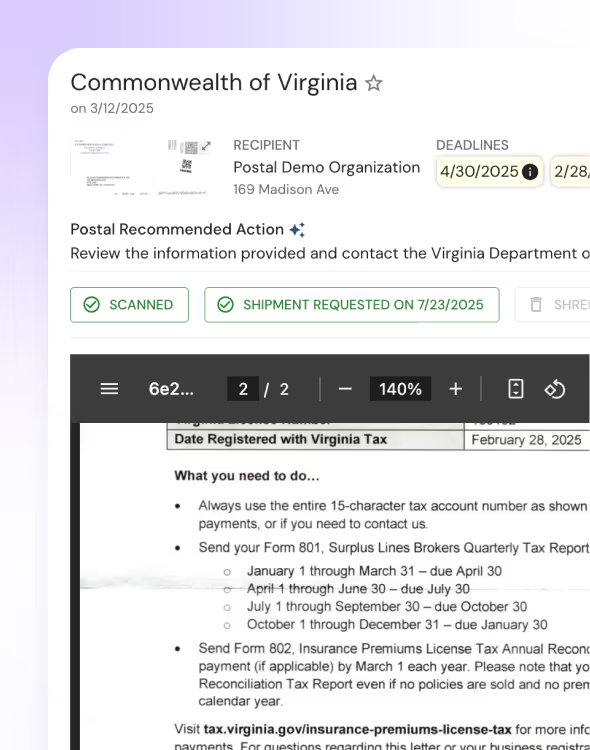
Postal’s advanced AI gives you an instant overview of all your compliance-related mail with next steps flagged for you.
- Due dates, penalties, and action extracted for you by AI.
- All your correspondence summarized and stored online.
- The right teammate notified every time mail is received.

Leave service of process to us
Hand off your compliance tasks to Postal with ease. Simply tag the Postal compliance team and they’ll make sure your compliance tasks and filings are handled accurately and on time.
- Stay compliant with changing laws and regulations
- Specialized in corporate licensing and insurance compliance
- Focus on your business and leave compliance to Postal

Secure and private mail handling
Protect your data with a secure virtual mailbox from Postal. Stringent security ensures that your data is encrypted, redacted when needed, and access controlled.
- Your data is protected at rest and in transit, so it’s never exposed as it moves through our systems.
- Postal runs redaction models on extracted text from documents, limiting the scope of data that large language models use to analyze your documents.
- Only the people who need it can reach your data, every action is logged, and everything is backed up to prevent data loss.

In Georgia, having a registered agent is essential for any business entity, such as corporations and limited liability companies (LLCs). The registered agent serves as the official point of contact for receiving important legal documents, such as service of process, tax notifications, and other official communications from the state. This ensures that the business maintains compliance with state laws and is informed of any legal matters that may arise.
Additionally, a registered agent must have a physical address in Georgia, which allows them to be accessible during regular business hours. This requirement helps streamline communication between the business and state authorities. By appointing a reliable registered agent, businesses can focus on their operations, knowing that they have a dedicated representative to handle crucial correspondence and legal requirements.

When selecting a registered agent in Georgia, affordability plays a crucial role. Compare pricing structures among different agents, looking for hidden fees or annual costs that could inflate your total expenses. A transparent pricing model helps ensure you stay within your budget while getting the services you need.
Security is another essential aspect. A registered agent should provide a secure environment for your sensitive documents, protecting them from unauthorized access. Look for companies that offer robust data protection measures, such as encryption and secure online portals, to safeguard your information.
Lastly, having the ability to view your mail online enhances convenience and organization. Choose a registered agent that offers a user-friendly platform where you can easily access and manage your correspondence. This feature streamlines your business operations and ensures you never miss critical communications.
Georgia is home to over 1,374,000 small businesses, and a notable 85.5 percent of them operate with no employees, more than 3 points above the national figure. That points to a strong base of independent contractors and solo operators across the state.
Atlanta has grown into a major hub for film and television production, logistics, and financial technology, and the state more broadly has cultivated a reputation for being relatively easy and affordable to start a business in, with competitive tax incentives that have drawn companies of all sizes. Savannah, meanwhile, plays an important role in shipping and logistics thanks to its deepwater port.
To register a business in Georgia, you choose an LLC or corporation and file with the Georgia Secretary of State. From there, you handle any local permits and apply to the IRS for an Employer Identification Number.
Georgia calls its filing an Annual Registration, and the rule is the same for corporations and LLCs alike, with reports due by April 1 each year. Foreign entities of either type follow the identical deadline and fee as domestic ones.
The fee is $60 ($50 filing fee plus a mandatory $10 service charge, which now applies whether filing online or by mail). A late filing adds a $25 penalty, and the state moves to administratively dissolve a noncompliant entity 60 days after a delinquency notice. Reinstating a dissolved LLC costs $260 ($250 plus the $10 service charge).

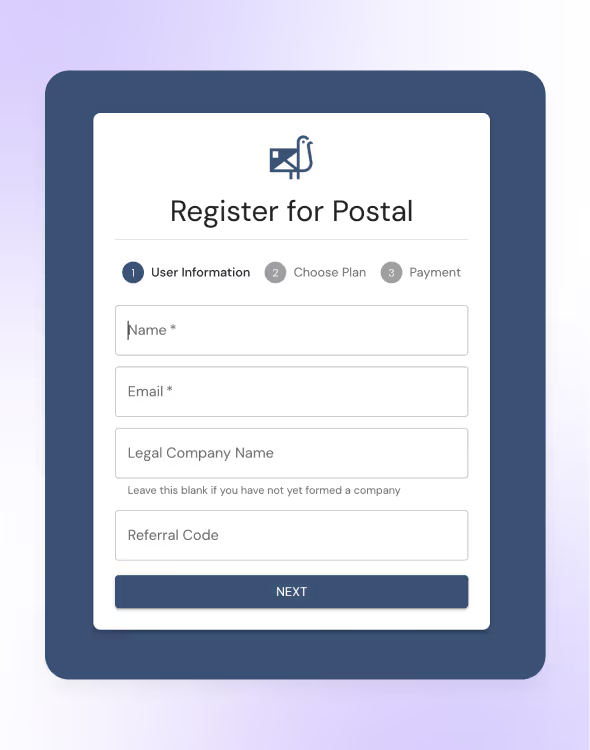
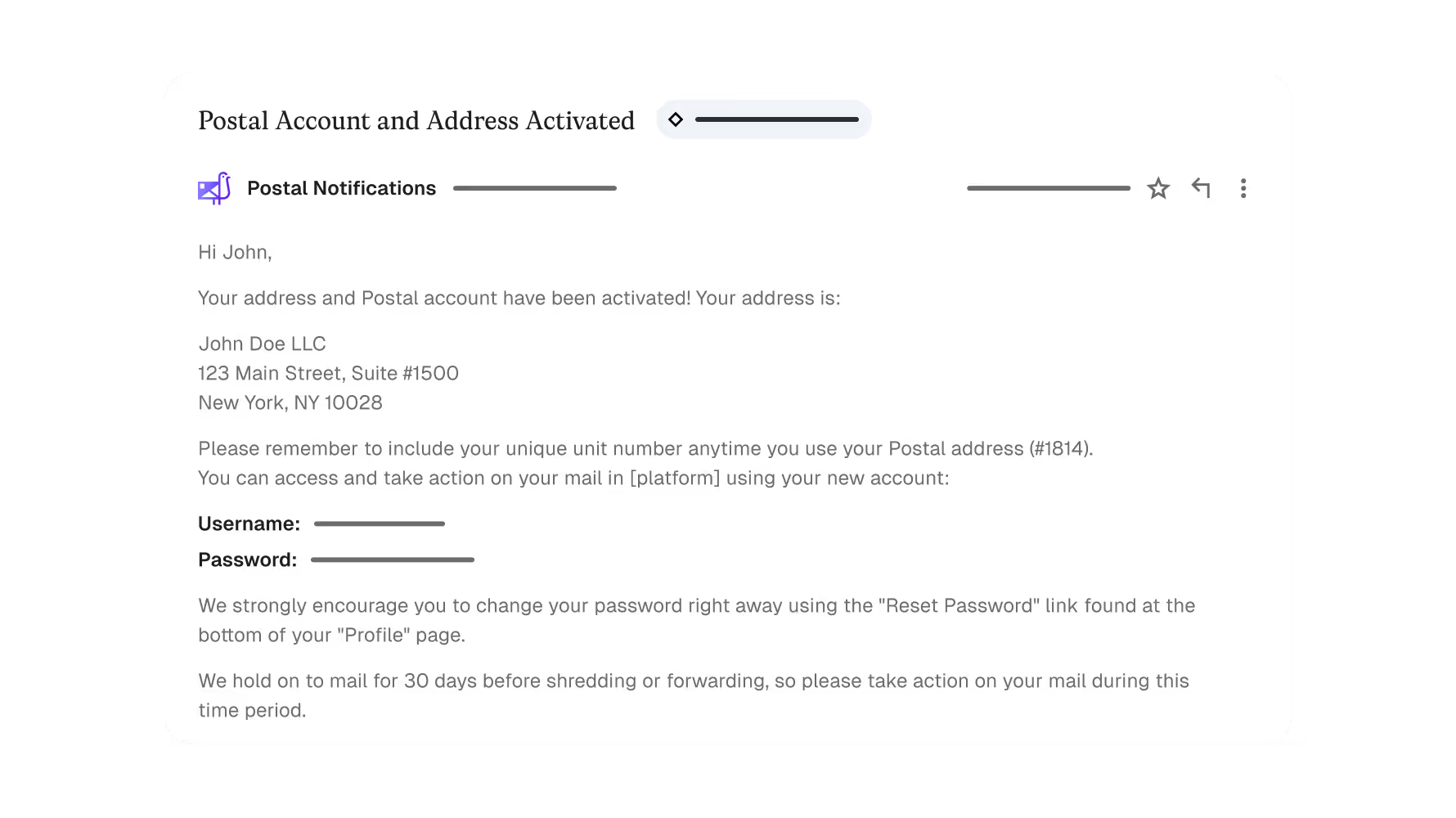
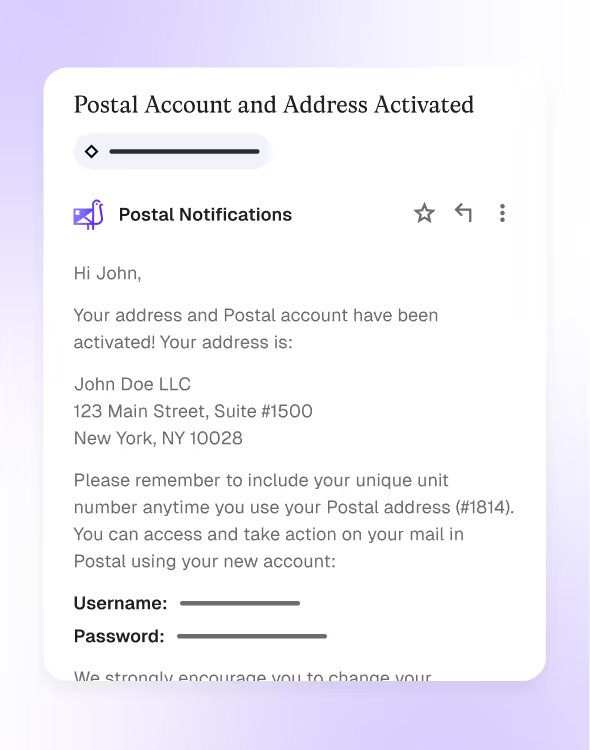
Manage your mail from anywhere
Receive scanned, summarized copies of your mail the day it’s received.
Put compliance on autopilot
If you need it, we’ll action your service of process mail for you.
What is Georgia's Annual Registration and who needs to file?
How is the $60 filing fee broken down in Georgia?
What happens if my Georgia business is administratively dissolved, and how much does reinstatement cost?
Why does Georgia have such a high percentage of solo-operator businesses?
What role does Atlanta play in Georgia's business economy?
How do I register a business in Georgia?
Available in all 50 states



- Security compliant
- Change of address guidance
- Friendly customer support