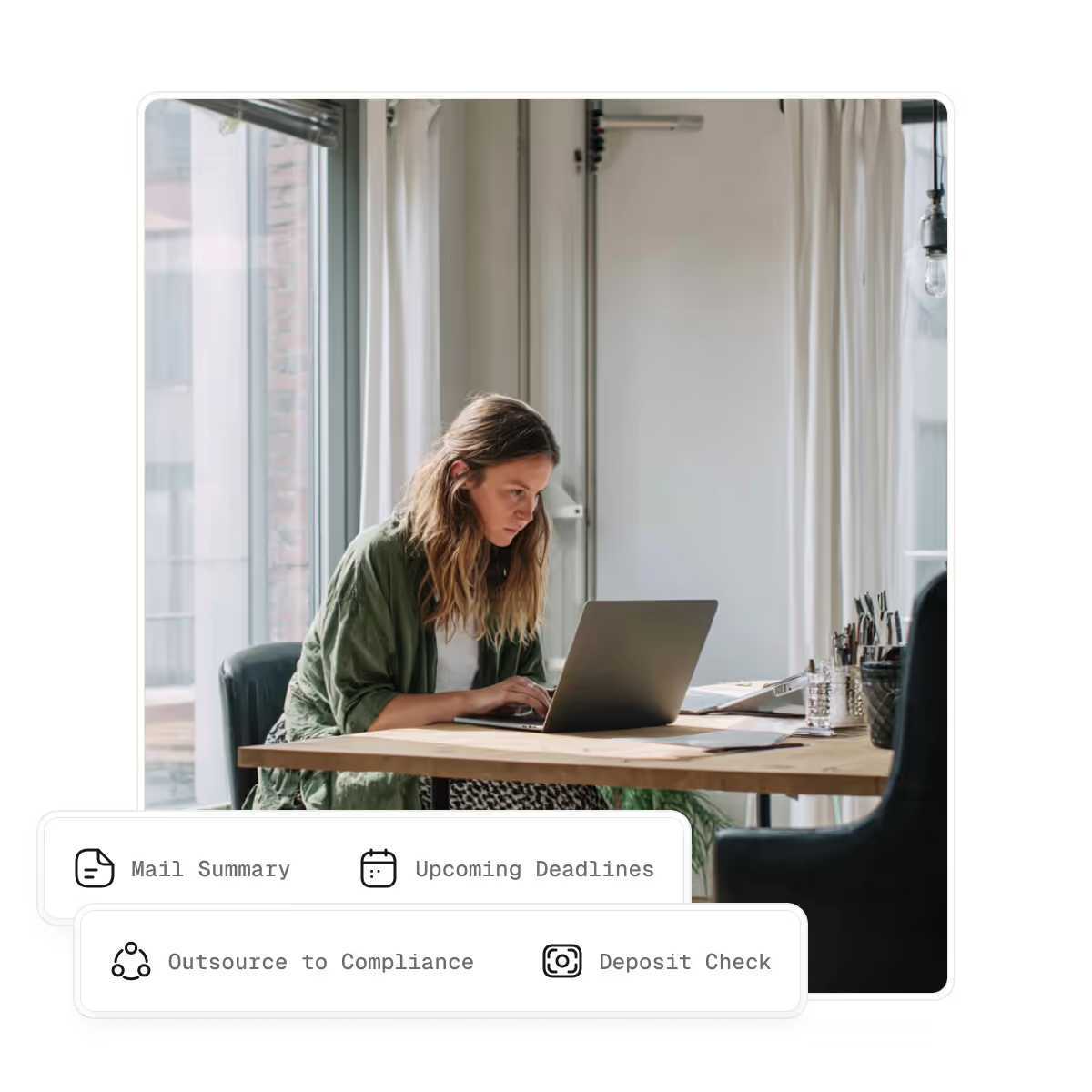

Secure document receipt
Recieve critical legal documents like lawsuits and tax notices without compromising your private address.

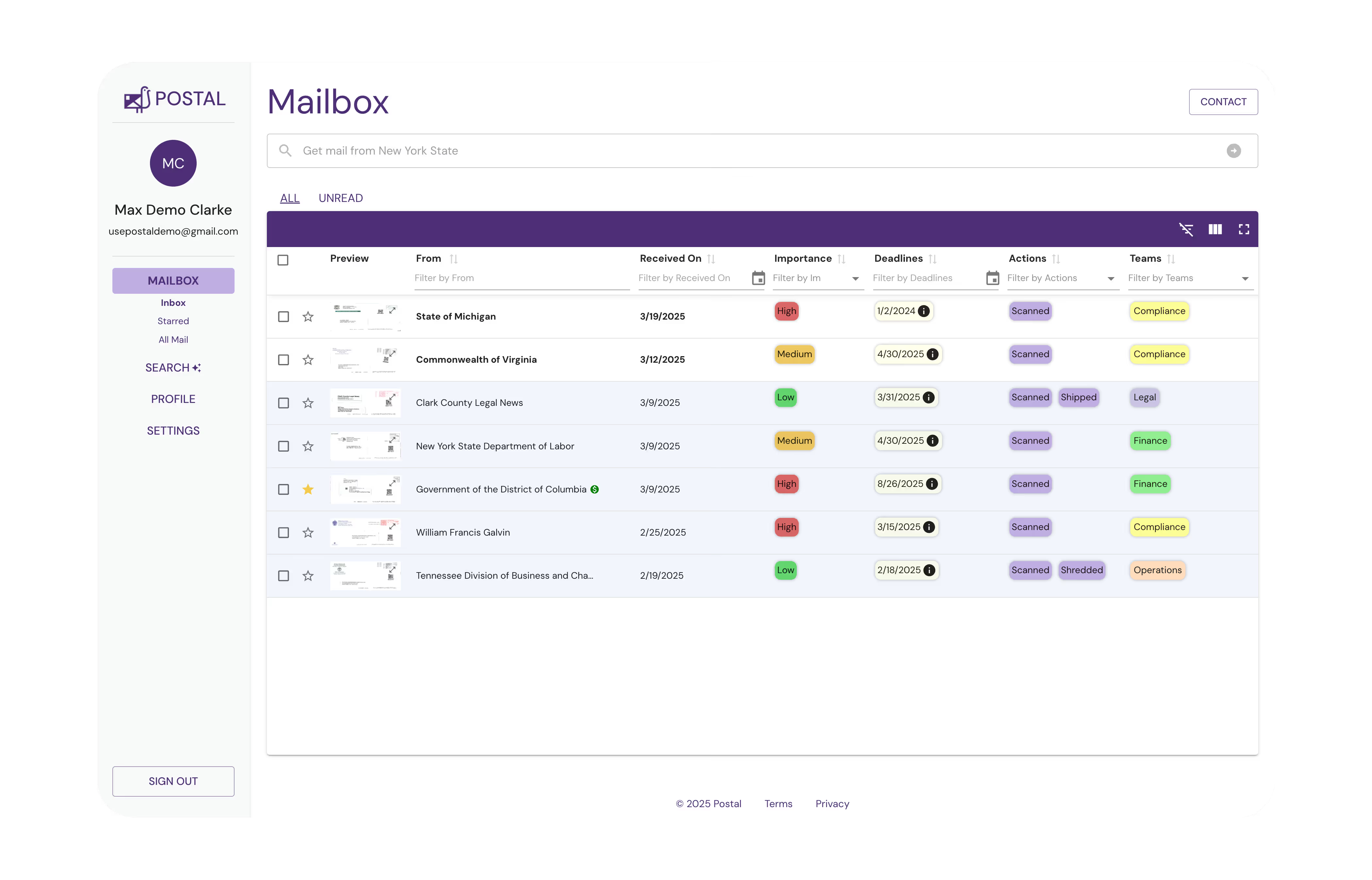
Access your mail online
See and manage your mail from anywhere. Get notifications for due dates and required actions for all your critical mail.

Automate compliance tasks
Stay focused and save time by handing off your compliance tasks to Postal's team of compliance experts.
119 E. Court Street,
Cincinnati, OH 45202

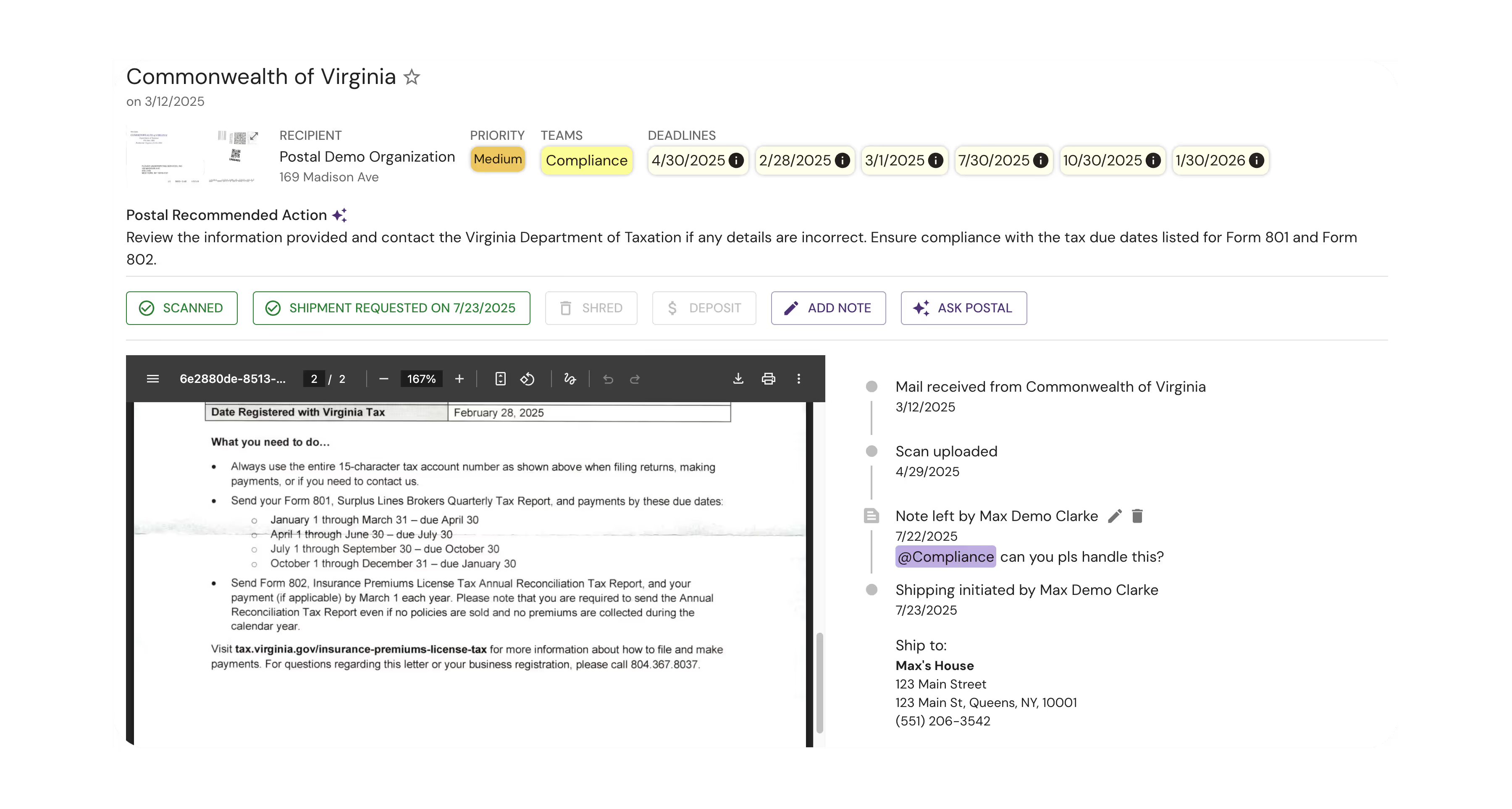
See deadlines at a glance
Postal’s advanced AI gives you an instant overview of all your compliance-related mail with next steps flagged for you.
- Due dates, penalties, and action extracted for you by AI.
- All your correspondence summarized and stored online.
- The right teammate notified every time mail is received.

Leave service of process to us
Hand off your compliance tasks to Postal with ease. Simply tag the Postal compliance team and they’ll make sure your compliance tasks and filings are handled accurately and on time.
- Stay compliant with changing laws and regulations
- Specialized in corporate licensing and insurance compliance
- Focus on your business and leave compliance to Postal

Secure and private mail handling
Protect your data with a secure virtual mailbox from Postal. Stringent security ensures that your data is encrypted, redacted when needed, and access controlled.
- Your data is protected at rest and in transit, so it’s never exposed as it moves through our systems.
- Postal runs redaction models on extracted text from documents, limiting the scope of data that large language models use to analyze your documents.
- Only the people who need it can reach your data, every action is logged, and everything is backed up to prevent data loss.

In Ohio, appointing a registered agent is a requirement for businesses, including corporations and limited liability companies (LLCs). A registered agent serves as the official point of contact for the business, receiving critical documents such as legal notices, tax forms, and service of process. This ensures that the business remains compliant with state regulations and important correspondence is handled promptly.
Having a registered agent also enhances a company's credibility and provides an additional layer of privacy for owners. Instead of listing personal addresses on public documents, businesses can use the agent's address. This not only keeps personal information confidential but also ensures that important communications are managed effectively, reducing the risk of missing essential deadlines.

When choosing a registered agent in Ohio, affordability is a key factor. Look for services that provide clear pricing without hidden fees. Compare options to find a registered agent that fits within your budget while still offering essential services. This ensures that you maintain compliance without overspending.
Security is another critical aspect. The registered agent will handle sensitive legal documents, so choose one with a strong reputation for maintaining confidentiality and secure systems. Verify that the agent has robust privacy policies and proactive measures to protect your information from unauthorized access.
Finally, consider the ability to view your mail online. A registered agent that provides a user-friendly online portal allows you to access important documents at your convenience. This feature can significantly streamline your business operations and ensure you never miss critical communications.
Ohio counts over 1,081,000 small businesses, and about 83.1 percent of them operate without employees, a bit above the national average.
Columbus has emerged as a notable logistics and technology hub thanks to its central location and the presence of Ohio State University, while Cincinnati and Cleveland retain strong manufacturing and healthcare bases tied to the state's industrial history. That mix of old and new industry has helped Ohio support a broad range of small business types across its largest cities.
Registering is a matter of picking an LLC or corporation, then filing with the Ohio Secretary of State. From there you handle local permits and pull an Employer Identification Number from the IRS.
Ohio is unusual: neither standard corporations nor LLCs are required to file any periodic report with the Secretary of State at all, a rare exemption that sets Ohio apart from nearly every other state. The biennial report requirement that does exist in Ohio applies only to professional associations (Ohio's term covering what other states call professional corporations) and limited liability partnerships, not to standard for-profit corporations or regular LLCs. Foreign corporations and foreign LLCs share the same exemption as their domestic counterparts.
There's no report to file and no fee for either standard entity type. The main ongoing obligation is maintaining a current statutory agent on file with the state; letting that lapse, rather than skipping a report, is what actually risks administrative dissolution or cancellation.

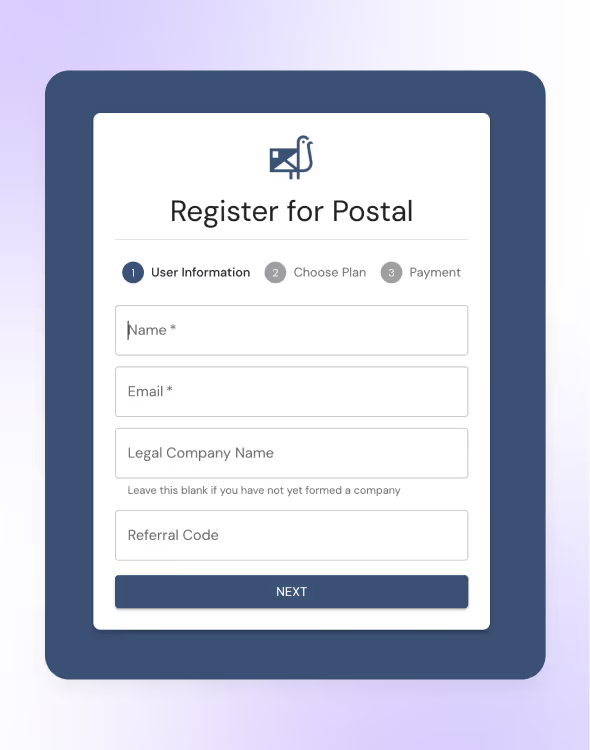
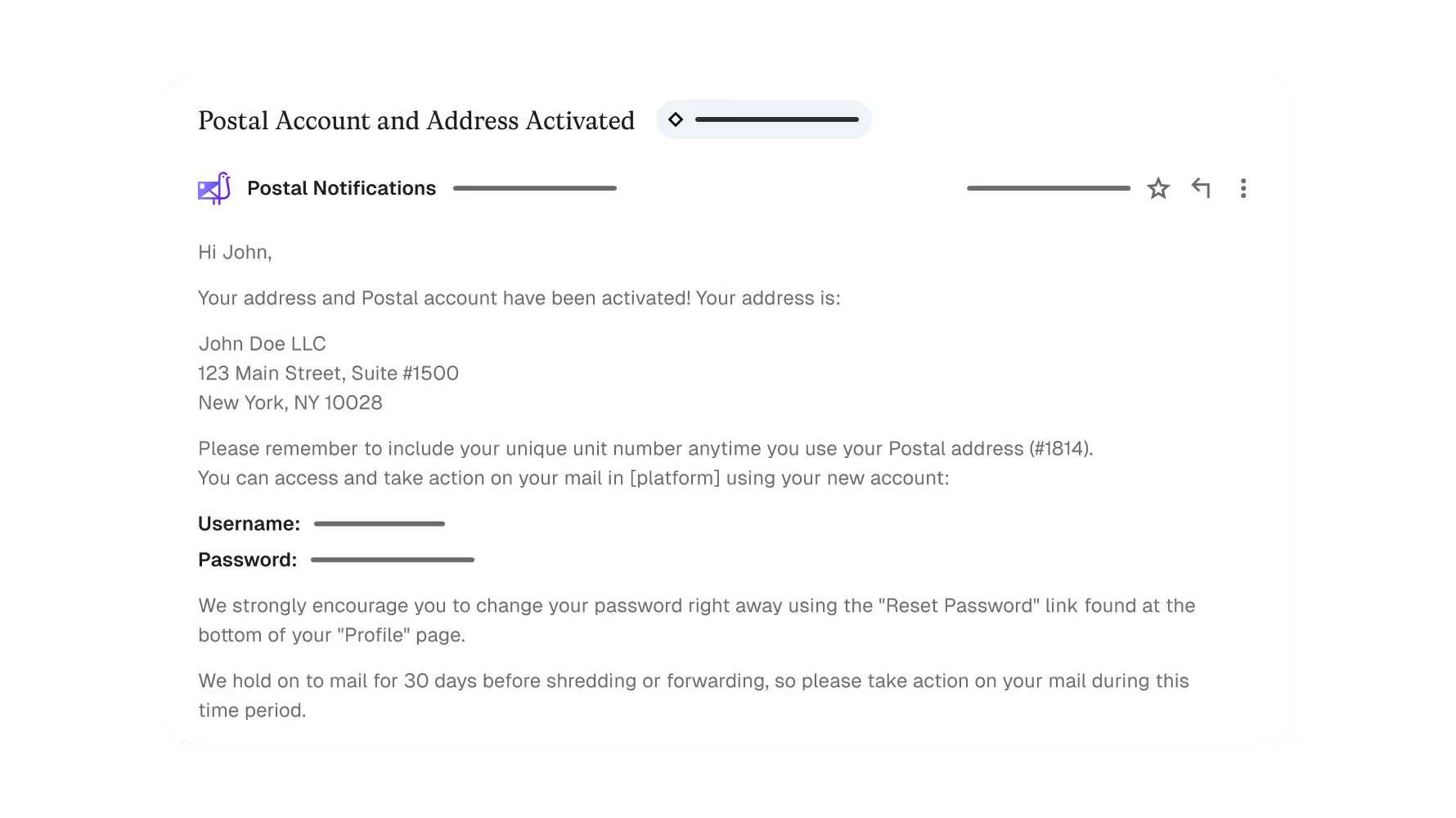
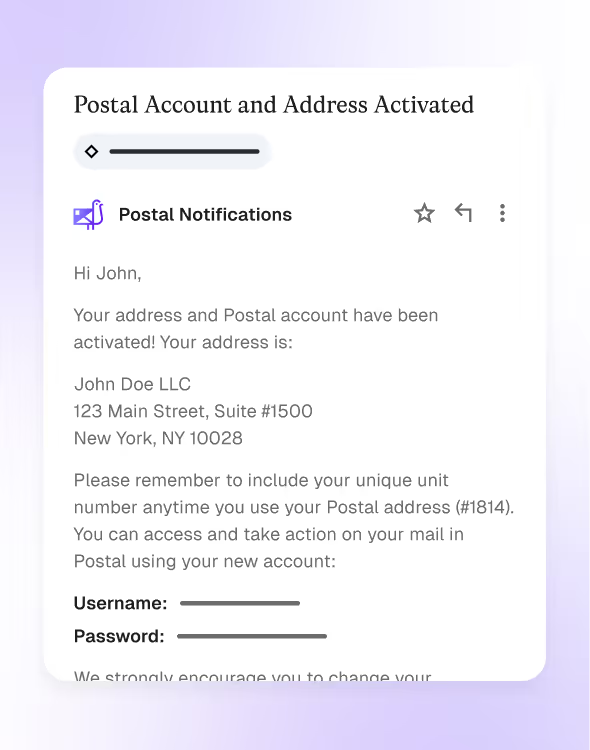
Manage your mail from anywhere
Receive scanned, summarized copies of your mail the day it’s received.
Put compliance on autopilot
If you need it, we’ll action your service of process mail for you.
Does Ohio require an annual report from LLCs or corporations?
If there's no annual report, what is the main ongoing obligation?
Does any type of Ohio entity have to file a report?
What makes Ohio's business landscape diverse?
How many small businesses does Ohio have?
How do I register a business in Ohio?
Available in all 50 states



- Security compliant
- Change of address guidance
- Friendly customer support